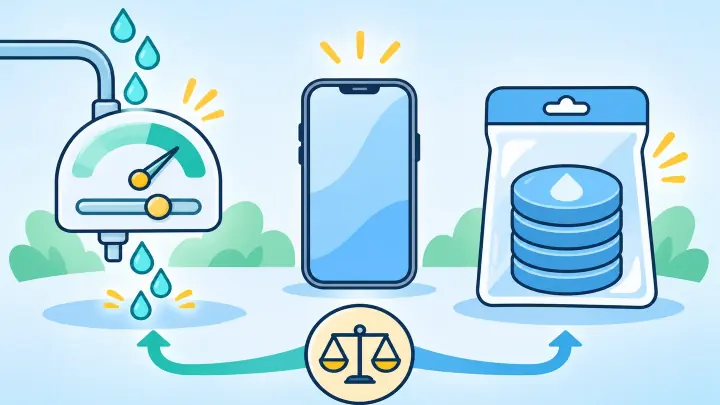
TLDR
- Fixed plans buy a set bundle and validity.
- PAYG deducts from credit as data is used.
- Background apps can make PAYG costs less predictable.
- Long-lived credit suits an emergency backup.
- Heavy users usually pay less per gigabyte with a bundle.
The plans measure the same data in different ways
A fixed plan might provide 5 GB for 15 days. You pay once, and the package stops when the data or validity ends. The cost stays known even when the effective price per gigabyte is not fully used.
A pay as you go plan holds account credit and deducts a rate for each megabyte or gigabyte. Rates can change by destination. Some providers bill in small units, while others round each data session upward.
Both can use one reusable eSIM profile. The billing method does not tell you which network, speed, or coverage the plan provides.
Fixed bundles put a clearer ceiling on normal use
A map, photo backup, app update, and speed test can use very different amounts. With a bundle, an unexpected download consumes allowance. With PAYG, it consumes money until the credit or a spending control stops it.
Look for low-balance alerts, automatic top-up, and hard spending limits. Turn off automatic top-up if you want the balance to be the absolute maximum.
Compare package prices through uPhone’s data plan guide. For PAYG, calculate the cost of 1 GB from the published rate and compare that number with a bundle.
Unused data and unused credit are not the same
A fixed allowance may expire at the end of the trip. PAYG credit may remain for later travel, but only if the account rules keep it active.
Light backup use favors credit while streaming favors a bundle
A spare line used for one emergency map or message each month can fit PAYG well. So can a frequent traveler who crosses many countries but uses hotel Wi-Fi most of the time.
Video, hotspot work, cloud photos, and daily navigation favor fixed data. Bundles usually have a lower unit cost and make it easier to understand how much remains.
Control background traffic either way. Pause system updates, mark laptop hotspots as metered, and limit photo backup. A phone can use data while sitting in a pocket.
Read the inactivity clock before valuing reusable credit
Some balances expire after a set period without a purchase or data session. Others require a minimum top-up to keep the eSIM active. A reusable profile is not valuable if the credit disappears before the next trip.
Fixed plans have their own clocks. Check the activation window, the event that starts validity, and whether an add-on extends or overlaps the package.
Save the provider account login and label the profile. Deleting an old eSIM can make remaining credit harder to use and may require support to reissue it.
Country rates can change the winner during one trip
A PAYG plan may charge a low rate in one country and a much higher rate across the border. A regional fixed plan can cover the whole route at one price. Neither product should be called global without reading its country table.
Check partner networks in uPhone’s coverage guide. A cheap rate on a weak single partner is poor backup.
Use uPhone’s dual SIM guide to label the line and prevent the home carrier from becoming an accidental, expensive third option.
A small usage estimate makes the choice clear
- Estimate daily megabytes for maps, messages, calls, and work.
- Multiply by travel days and add a safety margin.
- Apply each PAYG country rate.
- Add minimum top-ups and currency fees.
- Compare the nearest fixed bundle.
- Check what happens to leftovers.
Confirm the phone supports the profile with uPhone’s compatibility checker. No price calculation matters on a locked or unsupported device.
Choose PAYG for occasional data and a fixed plan for predictable travel use
Credit avoids buying a large package for a few messages and can stay ready as backup. A bundle lowers unit cost and keeps ordinary trip spending easier to see.
Compare realistic use, expiration, automatic top-up, and rates in every destination. The best choice is the one that remains predictable under your actual phone habits.