🇮🇹 eSIM for Italy
- Unlimited data
- 7-day validity
- Fast and reliable internet
- No more roaming charges
- Instant QR code by email
* As low as price reflects the cheapest per-day rate, based on the longest available unlimited data plan duration.







Why choose us?
See how uPhone compares with other options in Italy.

eSIM prices for Italy
All prices in USD
7 days of unlimited data in Italy costs $15.46 — about $2.21 a day on TIM, Vodafone Italy or WINDTRE, with no roaming charge and no SIM to swap. In Italy, 5G is live and median mobile download speed is 55.8 Mbps.
Which networks you connect to in Italy
Your eSIM roams onto Italy's own operators. These are the networks and the frequencies they run — check your phone supports them before you travel.
Source: Ookla Speedtest Global Index, July 2025
Coverage in Italy
B32 (1500 MHz L-band) used as supplemental downlink by TIM, Vodafone, and WINDTRE; many non-European phones lack B32. 3G network shutdowns completed by TIM (Oct 2022), Vodafone (Feb 2023), and WINDTRE (2023); Iliad never operated a 3G network.

Enjoy your Italy vacation
Italy is the country that invented the art of living beautifully — and it shows in everything, from the Renaissance masterpieces lining the Uffizi to the precise ritual of a 7am espresso at a Milan bar counter. Rome layers 2,800 years of civilisation into a single walkable city; Venice floats impossibly on its lagoon; the Amalfi Coast plunges in hairpin drama from clifftop villages to cobalt Mediterranean water; Tuscany's cypress-lined hills contain some of the world's greatest wine, food and art. Whether you're threading through Cinque Terre's fishing villages, standing inside the Colosseum or eating cacio e pepe in a Roman trattoria, Italy delivers experiences of genuine depth. A uPhone eSIM gives you instant connectivity on TIM, Vodafone or WindTre networks, keeping navigation and translation apps running throughout your journey.
Top attractions in Italy
Italy has more UNESCO World Heritage Sites than any other country — its cultural and natural riches are extraordinary and impossible to exhaust in a single trip. These are the unmissable highlights.
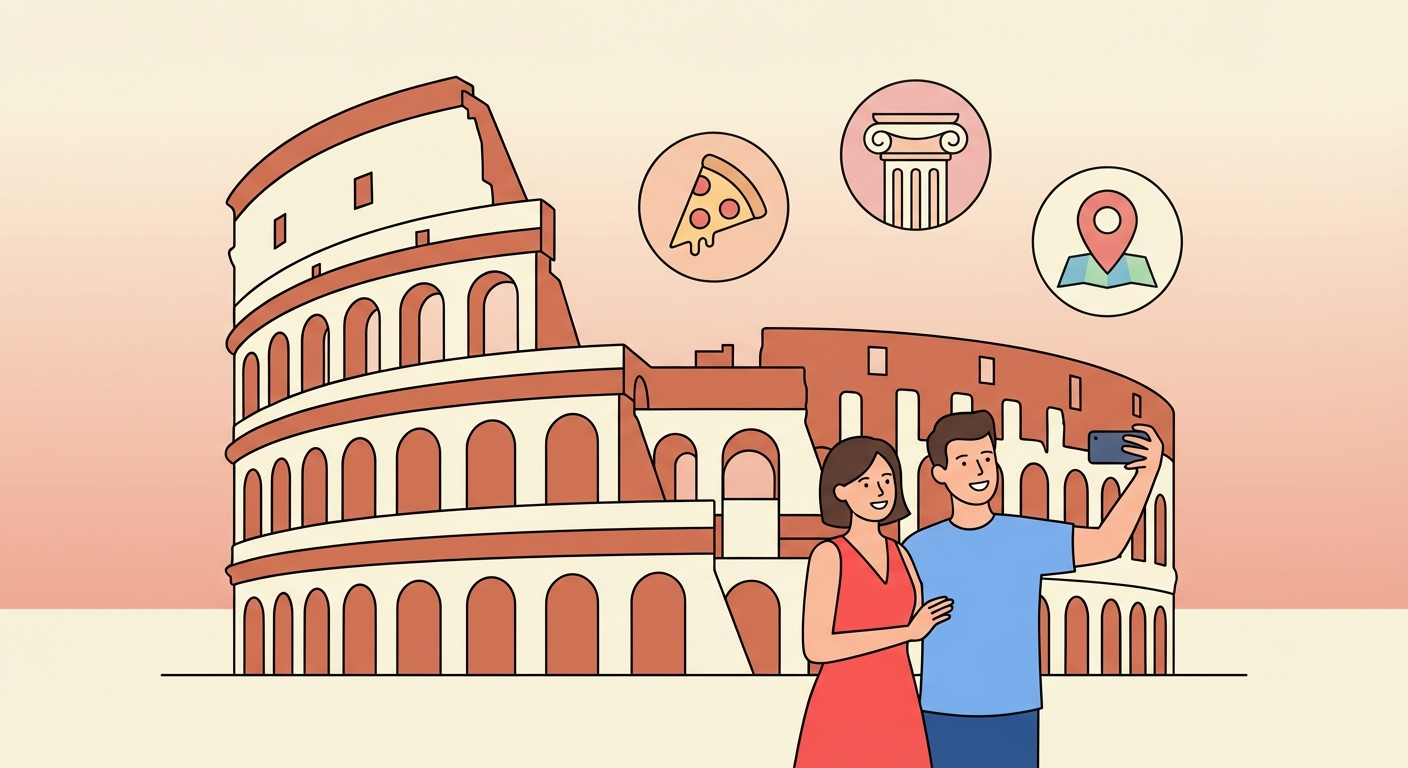
- The Colosseum & Roman Forum, Rome — Walk into the arena where gladiators fought before 80,000 spectators; then explore the ruined heart of the Roman Republic next door. Book tickets well in advance to skip the queues.
- The Vatican Museums & Sistine Chapel, Rome — Michelangelo's ceiling of the Sistine Chapel — planned over 4 years and painted lying on scaffolding — remains one of humanity's greatest achievements. Book timed entry weeks ahead.
- Florence: Uffizi & Duomo — Botticelli's Birth of Venus and Primavera; Brunelleschi's impossible dome; David in the Accademia. Florence is the world's greatest open-air art museum.
- Venice & the Grand Canal — A city with no cars, no straight streets, and 118 islands connected by 400 bridges. Take a vaporetto down the Grand Canal and get genuinely lost in the backstreets.
- Cinque Terre, Liguria — Five cliffside fishing villages connected by coastal footpaths above the Ligurian Sea. Hike the trails, eat pesto pasta and watch the sunset over the harbour.
- Amalfi Coast & Positano — One of Europe's most dramatic coastlines: switchback roads clinging to vertiginous cliffs above turquoise water, with whitewashed villages spilling down to the sea.
Popular foods to try in Italy
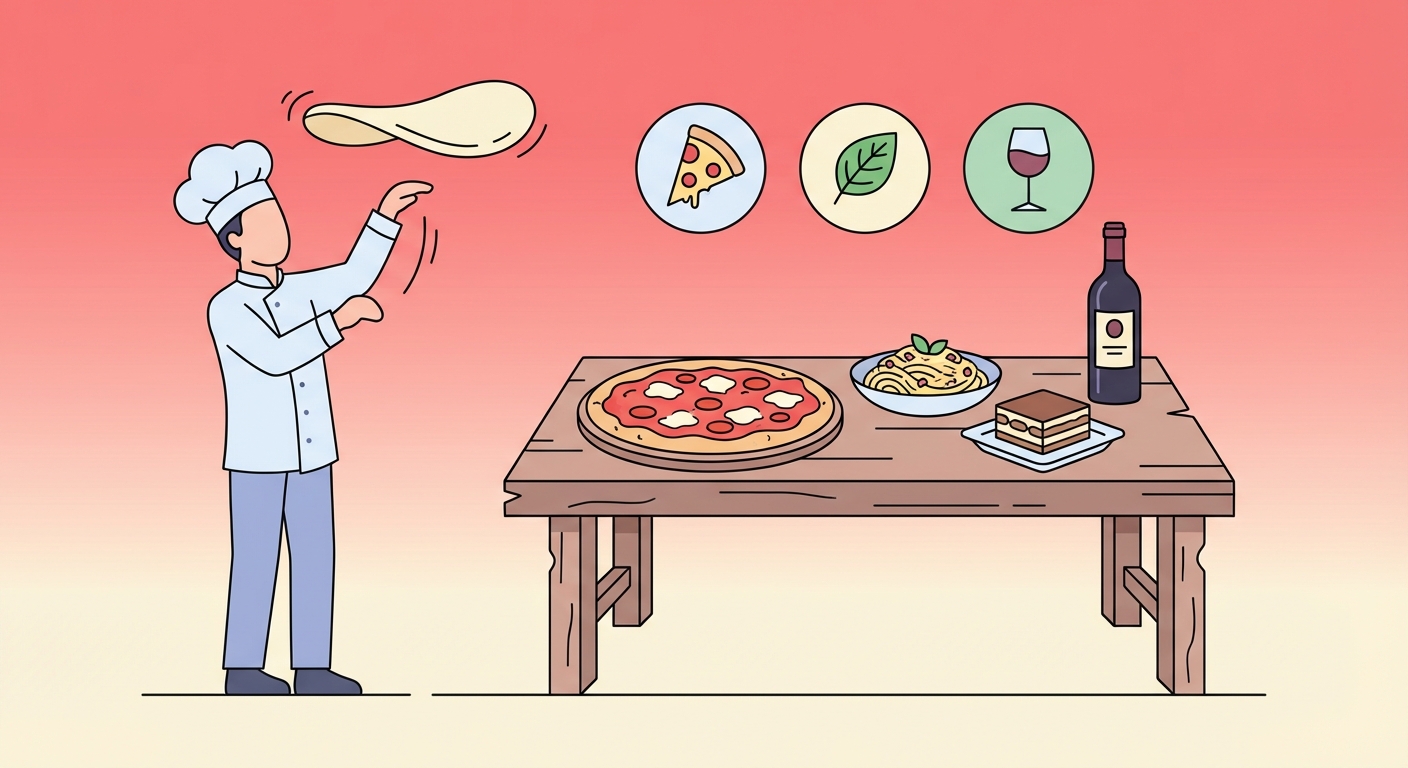
Italian food is regional, seasonal and fiercely local — what you eat in Naples is categorically different from what's served in Venice, Bologna or Palermo. The golden rule: eat what the region does best, choose the simplest preparations and trust the locals' recommendations over tourist menus.
- Pizza Napoletana, Naples — The original: a thin, slightly charred base with San Marzano tomatoes and buffalo mozzarella, baked in a wood-fired oven at 485°C for 90 seconds. Pizzeria da Michele in Naples is a pilgrimage site.
- Cacio e Pepe, Rome — Three ingredients — pasta, Pecorino Romano, black pepper — transformed by technique into one of Italy's most satisfying dishes. Simplicity mastered.
- Ragu Bolognese, Bologna — The real Bolognese: slow-cooked beef and pork ragu with milk and wine, served over fresh egg tagliatelle (never spaghetti). Bologna is Italy's food capital.
- Risotto alla Milanese, Milan — Saffron-scented, butter-finished risotto made from Carnaroli rice — the definitive northern Italian comfort dish.
- Gelato — Dense, creamy, intensely flavoured Italian ice cream. Look for artisan gelaterias where flavours are displayed in covered metal containers — a sign of freshly made product.
- Aperol Spritz — Prosecco, Aperol, a splash of soda and a slice of orange. Italy's universal aperitivo — order one at 6pm in any piazza and live like a local.
Best time to visit Italy
Spring (April–June) is Italy at its finest — wildflowers in Tuscany, mild temperatures (18–24°C), and manageable crowds before the summer peak. Easter week is spectacular for religious processions but also very busy; May is arguably the perfect month for most of Italy.
Autumn (September–October) rivals spring: the vendemmia (grape harvest) transforms Tuscany, Piedmont and Sicily; temperatures remain warm; and summer crowds have thinned considerably. October is especially beautiful for the Amalfi Coast when the sea is still warm enough to swim.
Summer (July–August) brings intense heat (35–40°C in the south), peak crowds at all major sites, and very high prices. Ferragosto (August 15th) sees most Italian businesses close as the entire country takes holiday simultaneously. Winter (November–March) offers low prices and empty museums — but many Amalfi Coast and Cinque Terre businesses close entirely.

What to pack for your visit to Italy
Italy rewards those who dress well and pack practically. The combination of cobblestoned streets, strict church dress codes and hot summer temperatures creates a specific packing checklist.
- Modest clothing for churches — Shoulders and knees must be covered inside all Italian churches and cathedrals, including St Peter's Basilica and the Sistine Chapel. Carry a scarf or sarong.
- Comfortable leather walking shoes — Italian cobblestones destroy unsuitable footwear. Choose well-cushioned shoes with good ankle support. Avoid brand-new shoes — break them in before you travel.
- Reef-safe sunscreen — Essential for the Amalfi Coast, Cinque Terre and Sicilian beaches. Italian pharmacies sell sunscreen but branded imports are expensive.
- A reusable water bottle — Italy's drinking fountains (nasoni in Rome) provide free, cold, clean water throughout the country. Fill up and save money on bottled water.
- Light linen or cotton layers — For summer in the south, lightweight breathable fabrics are essential. A cardigan covers church visits and cool evenings.
- Your uPhone eSIM — Activates on TIM or Vodafone Italia networks for fast 4G/5G coverage in cities and good signal even in rural Tuscan hillside villages.

Frequently Asked Questions
Everything you need to know about your Italy eSIM
Need help? We're here for you.
Questions before or during your trip — our support team is always available via live chat and email. Typical response time under 2 minutes.
Chat with us
Bundle Italy with other nearby countries.
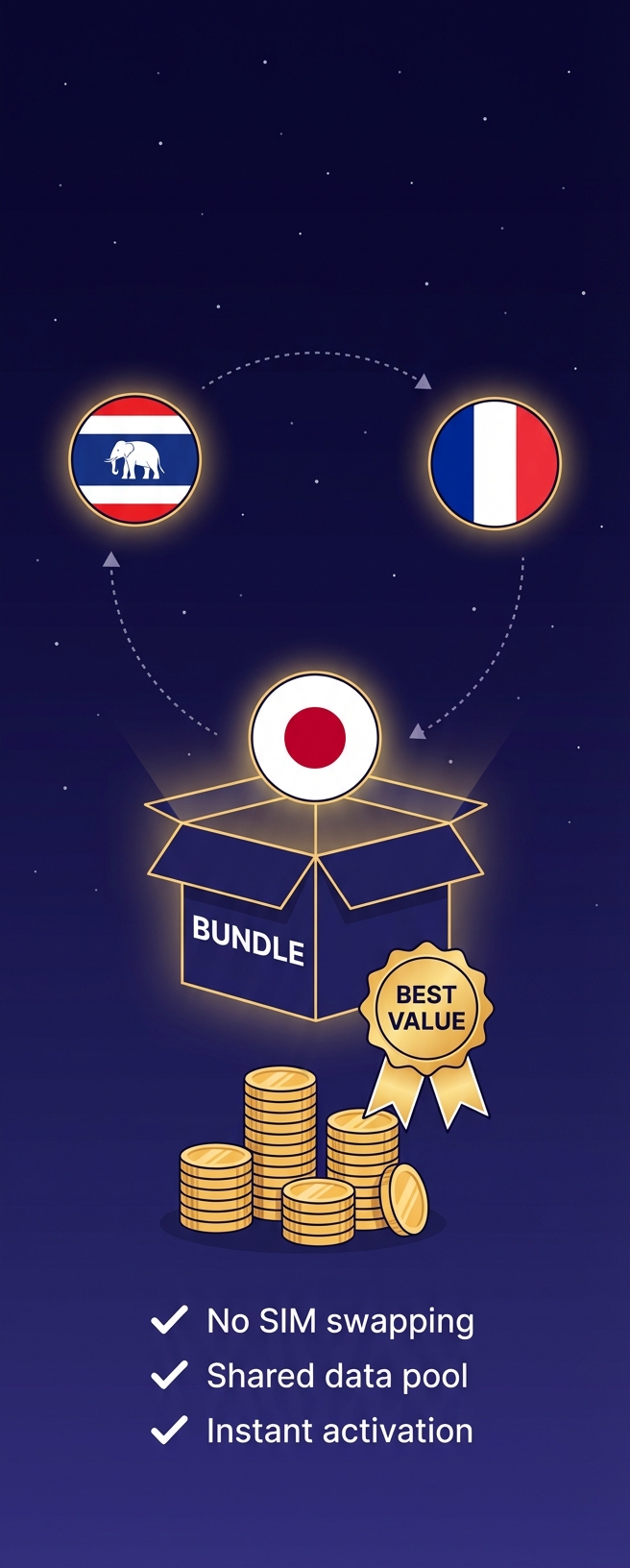
Multiple countries.
Other uPhone eSIM destinations
Explore eSIM plans for more countries around the world.