How Does a VPN Work?
Tunnels, encryption, servers — all explained simply, without the jargon.
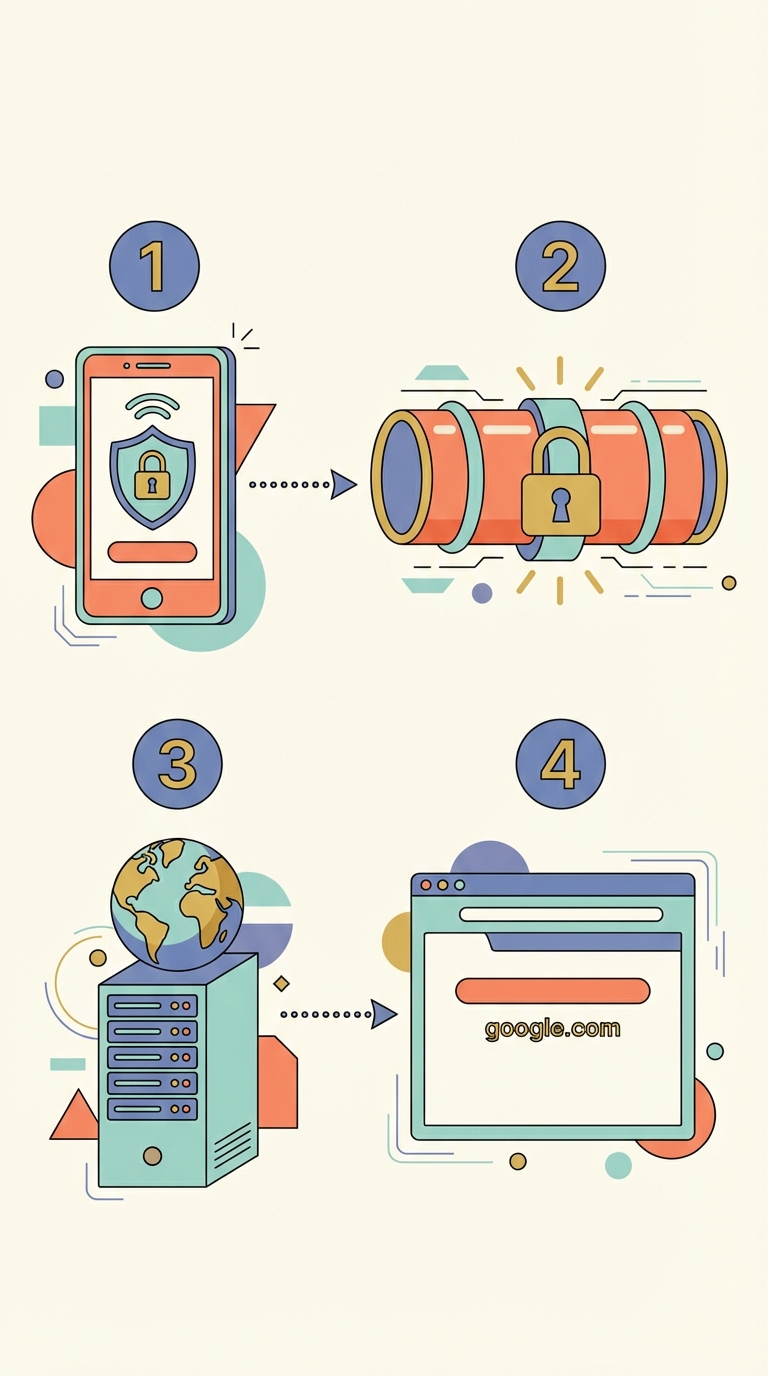
Your device connects to a VPN server
When you tap "Connect" in your VPN app, your device establishes a secure connection to one of the provider's servers — typically in a country you choose, like the UK, US, or Singapore. Not sure which VPN to use? See our <a href="/vpn/best-vpn-for-travel" style="color:var(--brand-text, var(--brand-primary));font-weight:600;">top VPN providers for travel</a>.
All your traffic is encrypted
Before leaving your device, every piece of data you send — websites, messages, video calls — is scrambled using military-grade encryption (AES-256). Even if someone intercepts it, they see only gibberish. This is why a VPN is essential on <a href="/vpn/public-wifi-safety" style="color:var(--brand-text, var(--brand-primary));font-weight:600;">public Wi-Fi networks</a>.
The VPN server acts as your middleman
The VPN server decrypts your request, fetches the website or service you asked for, and sends it back through the encrypted tunnel. To the outside world, the request came from the VPN server's location — not yours.
Websites see the VPN server's location
Because the website thinks you're in, say, the UK, it serves you UK content — and any country-level blocks (China's Great Firewall, UAE's VoIP ban, etc.) don't apply to you. This is also how a VPN lets you <a href="/vpn/vpn-for-streaming" style="color:var(--brand-text, var(--brand-primary));font-weight:600;">keep watching your streaming services</a> while abroad.
VPN protocols — which one to use
A VPN protocol is the set of rules used to create the encrypted tunnel. Most VPN apps pick the best one automatically — but it's useful to know what to choose in restricted countries. For a full breakdown of each protocol's pros and cons, see our VPN protocols guide.