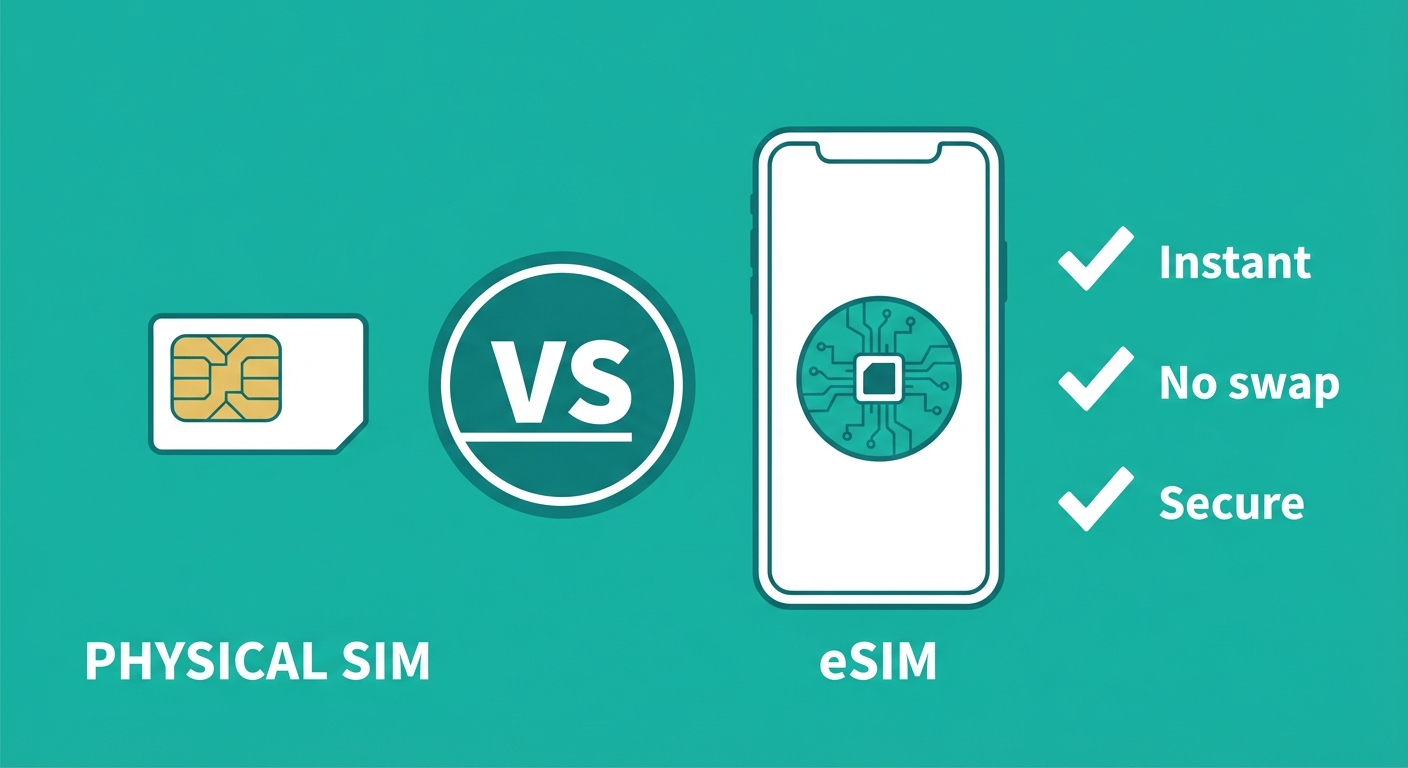
eSIM vs Physical SIM
Which is better for travel? A complete side-by-side comparison covering convenience, cost, availability, and compatibility.
eSIM wins for travel — with one caveat
eSIM is faster, more convenient, and increasingly universal. The caveat: your phone must support it. iPhone XR and later, and most Android flagships from 2020 onwards, are eSIM-capable. For country-by-country eSIM support details, see our eSIM coverage guide.
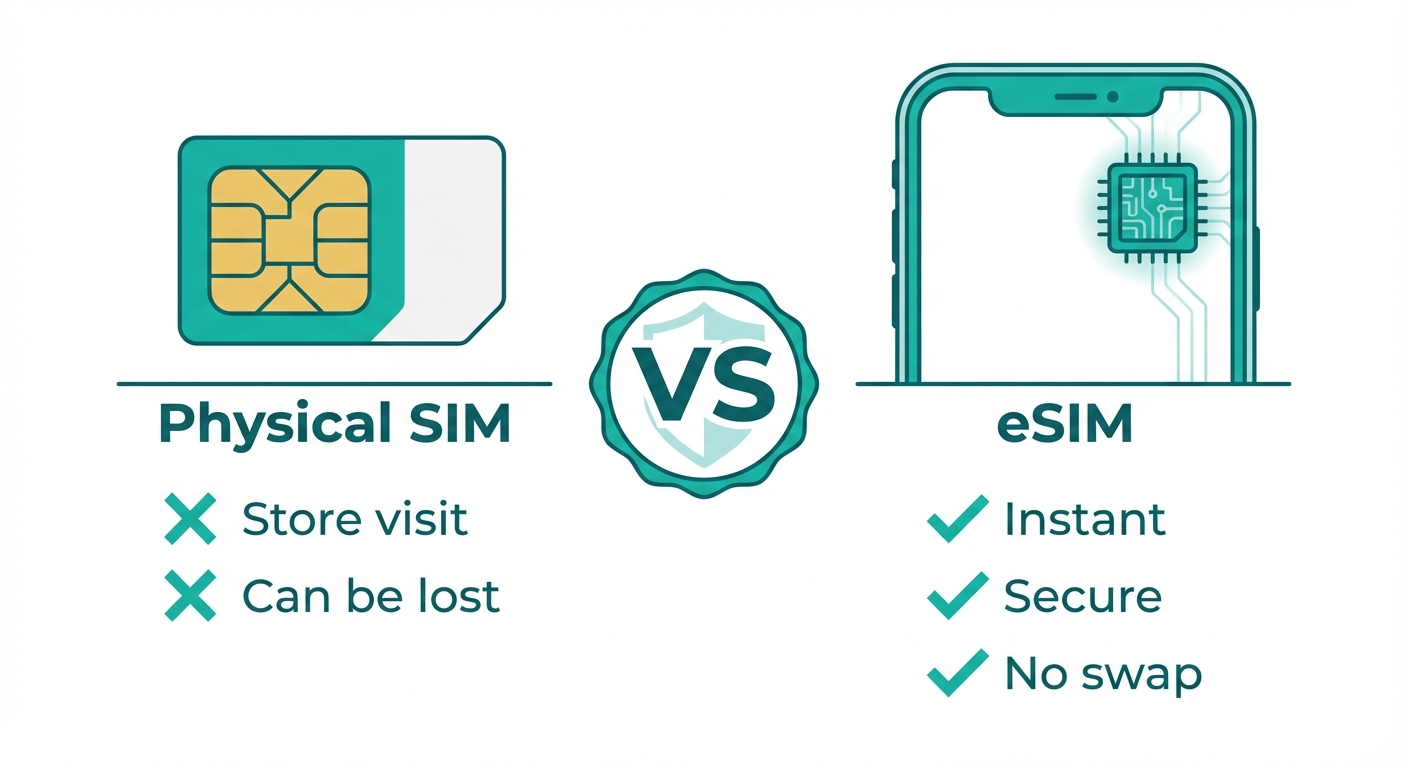
Full comparison — 10 key factors
eSIM wins on 8 out of 10 factors for travellers. Ready to get started? Browse the best eSIM providers or read how to run eSIM + physical SIM simultaneously.
When physical SIM still wins
eSIM isn't perfect for every situation. There are three scenarios where a physical SIM still makes more sense. Before travelling, check the eSIM data plans guide to understand costs and plan types.
If your phone is an iPhone 8 or earlier, or an older Android, it won't support eSIM. A physical SIM is your only option.
Some budget phones are locked to a carrier and cannot use third-party eSIMs until unlocked. Check with your carrier first.
A small number of countries have restricted eSIM infrastructure. Cuba, parts of sub-Saharan Africa, and some markets still rely heavily on physical SIMs.
When travelling to countries with limited eSIM support, check our eSIM coverage guide before you book.