eSIM Data Plans Explained
Prepaid vs postpaid, data-only vs voice-enabled — and exactly how to choose the right plan for your trip.
Prepaid vs postpaid — start with prepaid for travel
A prepaid plan means you pay upfront for a fixed amount of data. When it's used up, you buy more. No bill at the end, no surprise charges. For travel, prepaid is almost always the right choice. Not sure which provider to use? See the best eSIM providers ranked.
A postpaid plan bills you at the end of a monthly cycle — great for residents and long-term stays, but unnecessary overhead for a 1–2 week holiday.
Do you need calls on your eSIM?
Most travellers use data-only plans combined with WhatsApp, FaceTime, or Google Meet for calls. This approach costs significantly less and works everywhere there's internet — which is everywhere your eSIM has data. Check eSIM coverage by country to confirm support at your destination.
Our recommendation: For trips under 3 months, data-only + WhatsApp gives you everything you need at a lower price.
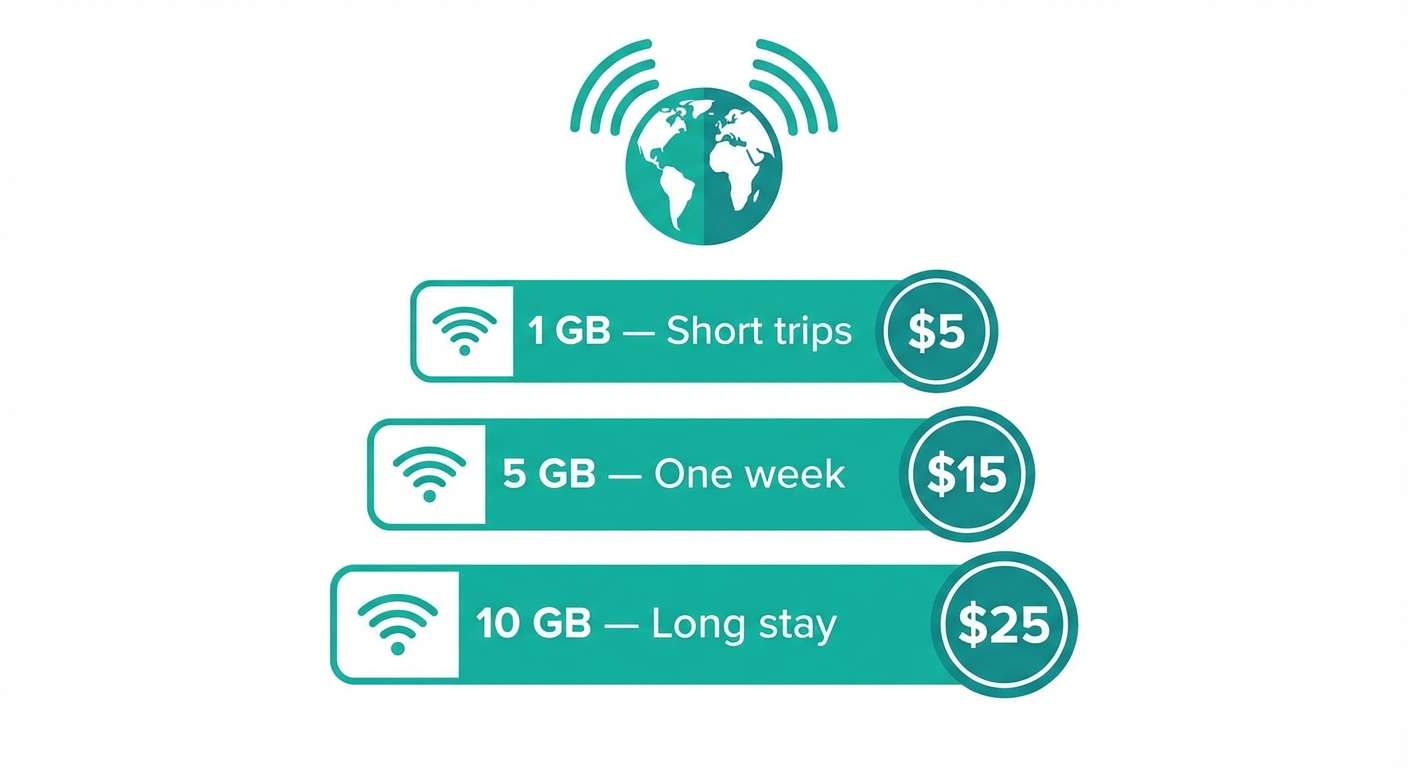
How much data do I need?
Plan validity — don't get caught out
A 7-day plan that expires before you finish your trip is wasted money. Validity typically starts from the first time you use data, not from purchase — but this varies by provider. Always check the terms before buying. For a full comparison of eSIM vs physical SIM costs, see our eSIM vs physical SIM guide.
Most plans start their validity timer the first time your device connects to a network using the eSIM.
You can purchase ahead of time, but only install/activate when you're ready to use it.
Running low? Many providers let you purchase additional data without replacing your eSIM.