Plans and comparisons
Compare plan formats, physical SIMs, global coverage, and remote-travel options.

Articles
4 published articles in this topic.
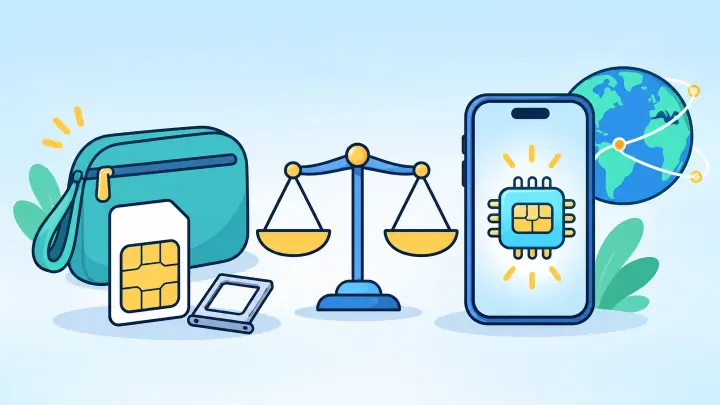
Travel eSIM vs International SIM Card
A travel eSIM and international SIM card can provide similar roaming service across countries. The eSIM arrives digitally and keeps the phone’s card slot free. The international physical SIM works in more older phones and can be moved between compatible devices. Compare the underlying countries, networks, rates, and number features because the format alone does not decide value.

eSIM vs Satellite Phone for Remote Travel
A travel eSIM is better where cellular networks exist because it is cheaper, faster, and easier for maps and internet apps. A satellite phone is built for calls in remote places beyond cell coverage, but it costs more and needs a clear view of the sky. High-risk trips may need both because one does not replace the other.

Pay As You Go eSIM vs Fixed Data Plan
A fixed data plan is better when you can estimate the trip and want a firm maximum price. Pay as you go eSIM credit is better for very light, uneven, or backup use when the per-megabyte rate is reasonable and credit lasts. Compare minimum top-ups, expiration, and country rates before deciding.

Country eSIM vs Global eSIM for One-Country Travel
A country eSIM is usually the better value for a trip that stays in one country because it often offers more data or stronger local partner choices for the price. A global eSIM can still win when you already have an active reusable plan, need airport transit coverage elsewhere, or want one backup profile for future trips.