How to Choose a VPN
A decision framework for travellers — five questions that cut through the marketing noise and help you pick the right VPN in under five minutes.
The 5 questions that matter
Ignore the marketing. Every VPN promises "military-grade encryption" and "blazing fast speeds". These five questions cut through to what actually differentiates providers for travellers.

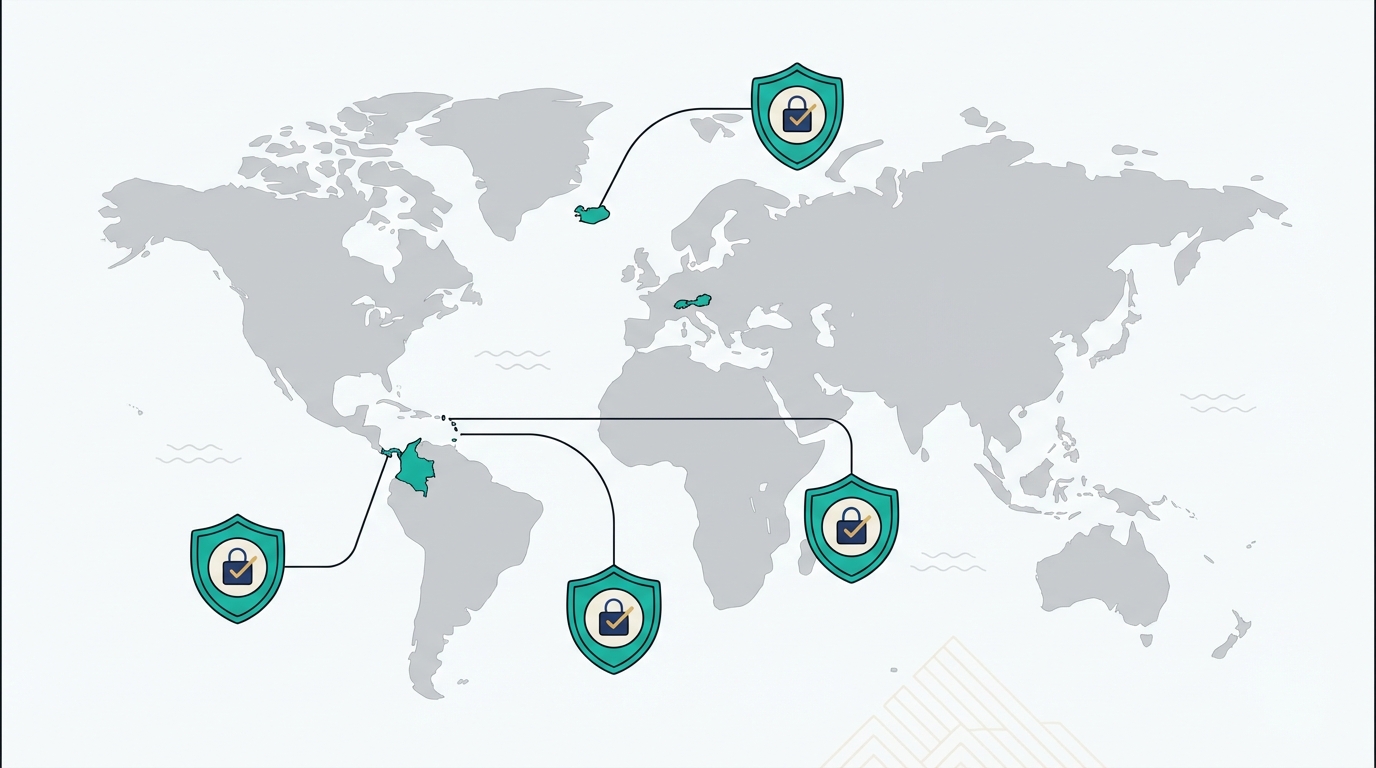
Where your VPN is based matters
Intelligence alliances like the Five Eyes (US, UK, Australia, Canada, New Zealand), Nine Eyes, and Fourteen Eyes have data-sharing agreements that can compel companies to hand over user data — or secretly monitor it. A VPN based in a non-member country is harder for these agencies to reach.
Jurisdiction matters significantly for journalists, activists, and high-risk individuals. For most travellers wanting to use Netflix, bank securely, and protect their data on public Wi-Fi, a well-audited no-log policy is more practically important than jurisdiction alone.
No-log means your activity is never recorded
There are two types of logs: connection logs (timestamps, IP addresses, session durations) and activity logs (which sites you visited, what you downloaded). A true no-log policy means neither type is stored.
Self-certification is meaningless. The providers worth trusting have had their no-log policies audited by independent firms:
Some providers publish "warrant canaries" — periodic statements that they have not received government data requests. If the canary goes silent, that tells you something has changed. Mullvad and ProtonVPN both maintain warrant canaries.

Top 5 VPN providers compared
All five providers below are reputable, independently audited, and appropriate for travellers. The differences are in the details.
| Feature | NordVPN | ExpressVPN | Mullvad | Surfshark | ProtonVPN |
|---|---|---|---|---|---|
| Jurisdiction | Panama | BVI | Sweden | Netherlands | Switzerland |
| No-log audit | ✅ PwC | ✅ KPMG | ✅ Cure53 | ✅ Deloitte | ✅ Securitum |
| Simultaneous devices | 6 | 8 | 5 | Unlimited | 10 |
| Price/month (annual) | ~$3.09 | ~$6.67 | €5.00 | ~$2.29 | Free / $4.99+ |
| Works in China | ✅ Yes | ✅ Yes | ⚠️ Sometimes | ✅ Yes | ⚠️ Limited |
| WireGuard support | ✅ NordLynx | ✅ Lightway | ✅ Yes | ✅ Yes | ✅ Yes |
| Kill switch | ✅ Yes | ✅ Yes | ✅ Yes | ✅ Yes | ✅ Yes |