New Zealand's dramatic landscapes transform with the seasons, offering distinct experiences throughout the year. Whether you're hiking the Milford Track in golden summer light or stargazing over Lake Tekapo in winter, timing your visit shapes your entire adventure. This guide breaks down what to expect month by month, helping you choose the perfect season for your New Zealand journey.
New Zealand's Four Seasons: What to Expect
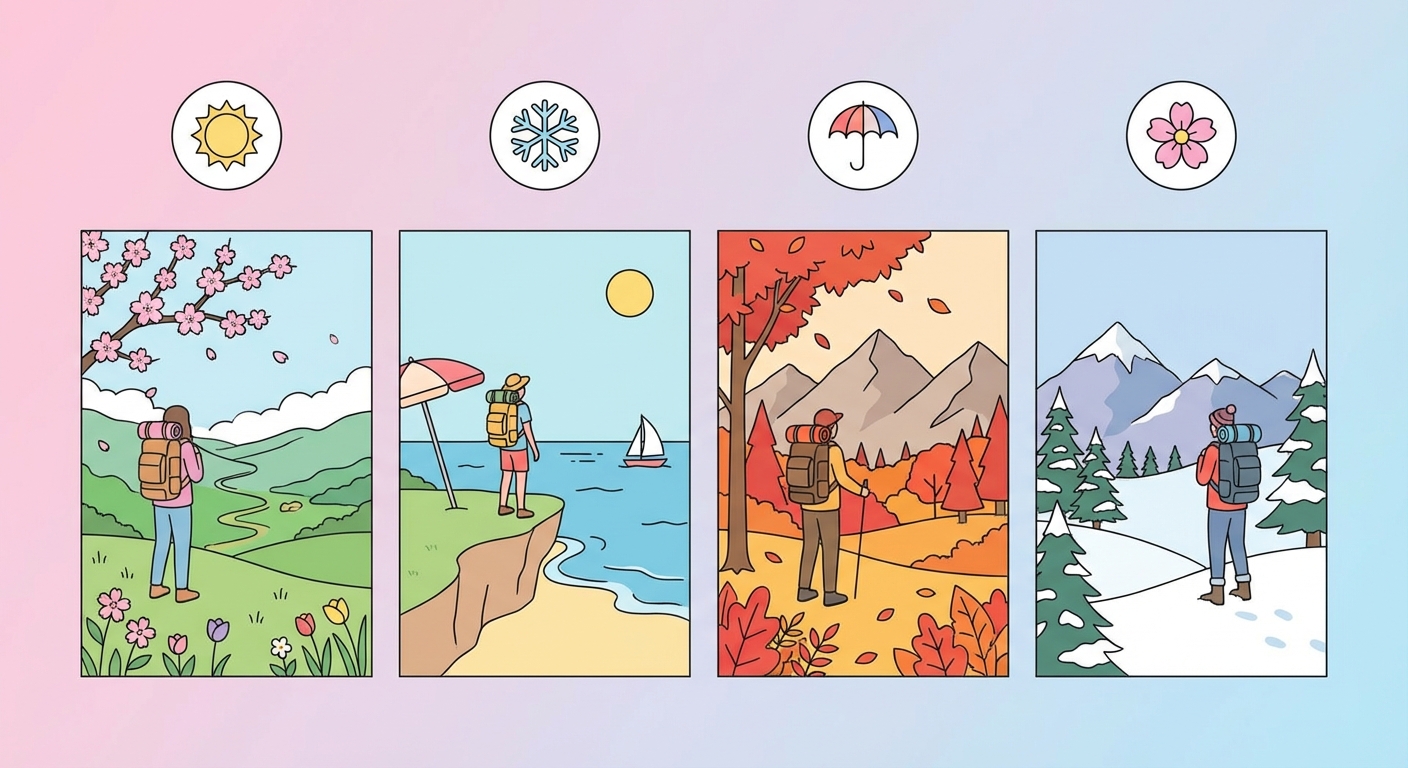
New Zealand sits in the Southern Hemisphere, so seasons are reversed from the Northern Hemisphere. Summer runs December to February, autumn March to May, winter June to August, and spring September to November.
Summer (December–February)
Summer brings warm weather, long daylight hours (up to 16 hours), and peak tourism. Daytime temperatures range from 20–25°C (68–77°F) in most regions, though it can reach 30°C (86°F) in northern areas. This is ideal for outdoor activities like hiking, kayaking, and beach visits. Popular spots like Queenstown, the Coromandel Peninsula, and Abel Tasman National Park get crowded during school holidays (mid-December to late January).
However, summer means higher accommodation prices and busy trails. If you visit in late February, you'll enjoy better weather than autumn while avoiding the worst crowds.
Autumn (March–May)
Autumn offers the best balance of good weather and fewer tourists. March and April are particularly pleasant, with temperatures around 17–20°C (63–68°F) and less rainfall than other seasons. The landscape transforms with golden and crimson foliage, especially striking in the South Island's Central Otago region around Arrowtown and Wanaka. Wine harvest season brings festivals and vineyard activities in Marlborough and Hawke's Bay.
Accommodation prices drop, and hiking trails are comfortable without summer crowds. May sees increasing rainfall and cooler temperatures, so plan accordingly.
Winter (June–August)
Winter suits snow lovers and those seeking solitude. The South Island's mountains receive significant snowfall, making it perfect for skiing at The Remarkables or Coronet Peak near Queenstown. Temperatures range from 6–12°C (43–54°F), with frosty mornings and occasional snow in elevated areas. The North Island stays milder, typically 8–15°C (46–59°F).
Winter brings dramatic lighting for photography, fewer tourists, and excellent stargazing. The Milky Way shines brilliantly over Lake Tekapo and remote areas. However, some tourist facilities close, roads can be icy, and daylight is limited (around 8–9 hours).
Spring (September–November)
Spring marks the transition to warmer weather, with temperatures climbing from 12°C to 18°C (54–64°F). Wildflowers bloom, native birds return, and it's an excellent time for hiking without summer crowds. November brings warmer days approaching summer conditions. Spring is underrated—you get pleasant weather, manageable crowds, and refreshed landscapes.
Peak vs. Off-Peak Travel: Pros and Cons
Peak Season (December–January)
- Best weather, longest daylight hours
- All tourist facilities fully operational
- Drawbacks: expensive flights and accommodation, crowded attractions, busy hiking trails
Off-Peak Seasons (March–May, September–November)
- Significantly cheaper rates for flights and hotels
- Shorter wait times at popular sites
- More authentic interactions with locals
- Still-pleasant weather for most activities
Winter (June–August)
- Lowest accommodation prices
- Ideal for skiing and stargazing
- Challenging weather for some activities, reduced daylight
Month-by-Month Highlights
January–February: Peak summer. Perfect for beach time at Piha or Ninety Mile Beach, but expect crowds and heat.
March–April: Autumn at its best. Wine festivals, golden landscapes, comfortable hiking conditions.
May–June: Autumn transitions to winter. Cooler temperatures, increasing rainfall, fewer tourists.
July–August: Winter sports season. Skiing available, stunning starry skies, lowest prices.
September–October: Spring wildflowers, warming weather, excellent hiking without crowds.
November: Spring heading into summer. Warm but not crowded. Great balance.