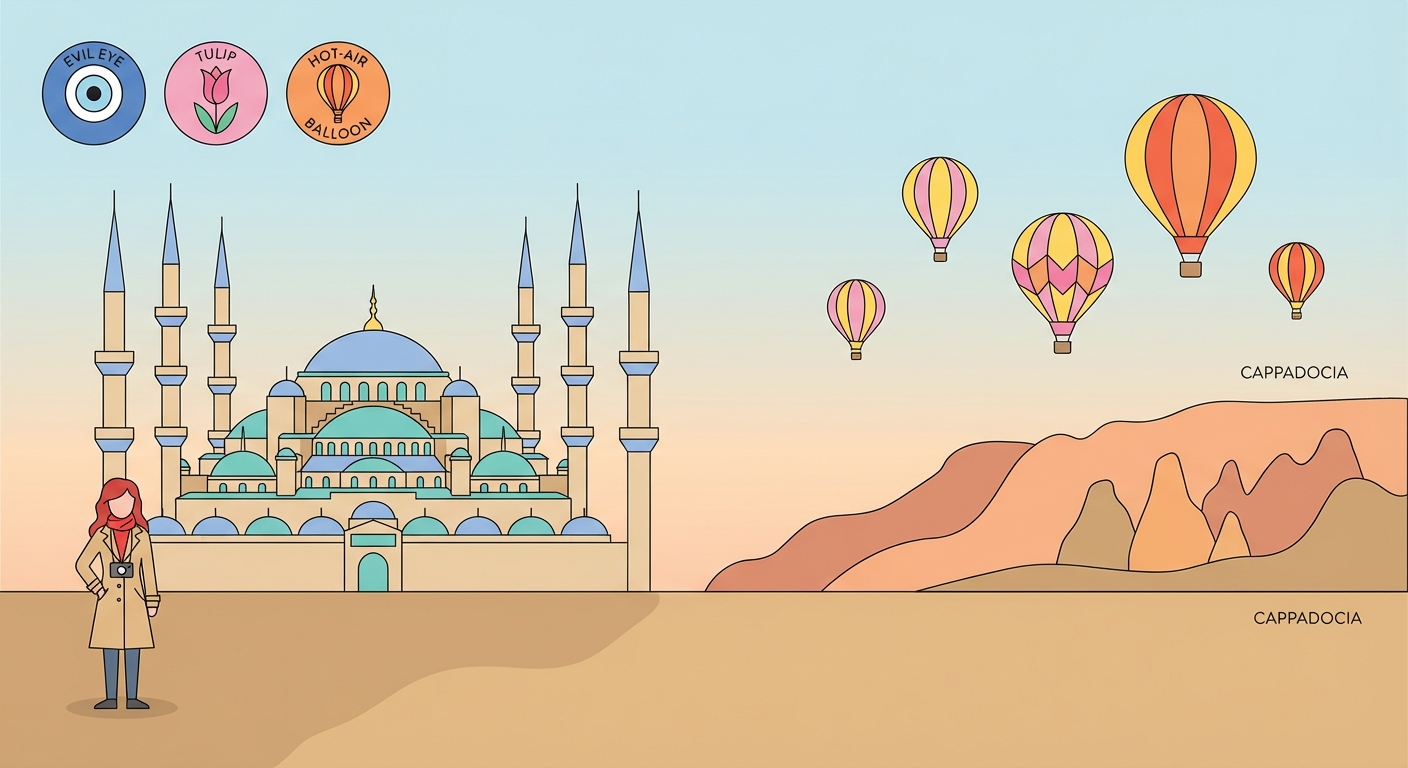
Turkey is a year-round destination, but timing your visit can dramatically enhance your experience. From Mediterranean beaches to snow-capped mountains, this transcontinental treasure offers distinct seasonal experiences. Whether you're exploring Istanbul's bustling streets, watching hot-air balloons drift over Cappadocia, or relaxing on the Aegean coast, understanding Turkey's seasonal patterns helps you choose the perfect time to visit.
Seasonal Weather Patterns
Turkey's climate varies significantly by region and season. The Mediterranean and Aegean coasts enjoy hot, dry summers and mild winters, while the Black Sea region stays cooler and greener year-round. Central Anatolia experiences more extreme temperature swings, with scorching summers and cold winters.
Summer (June–August)
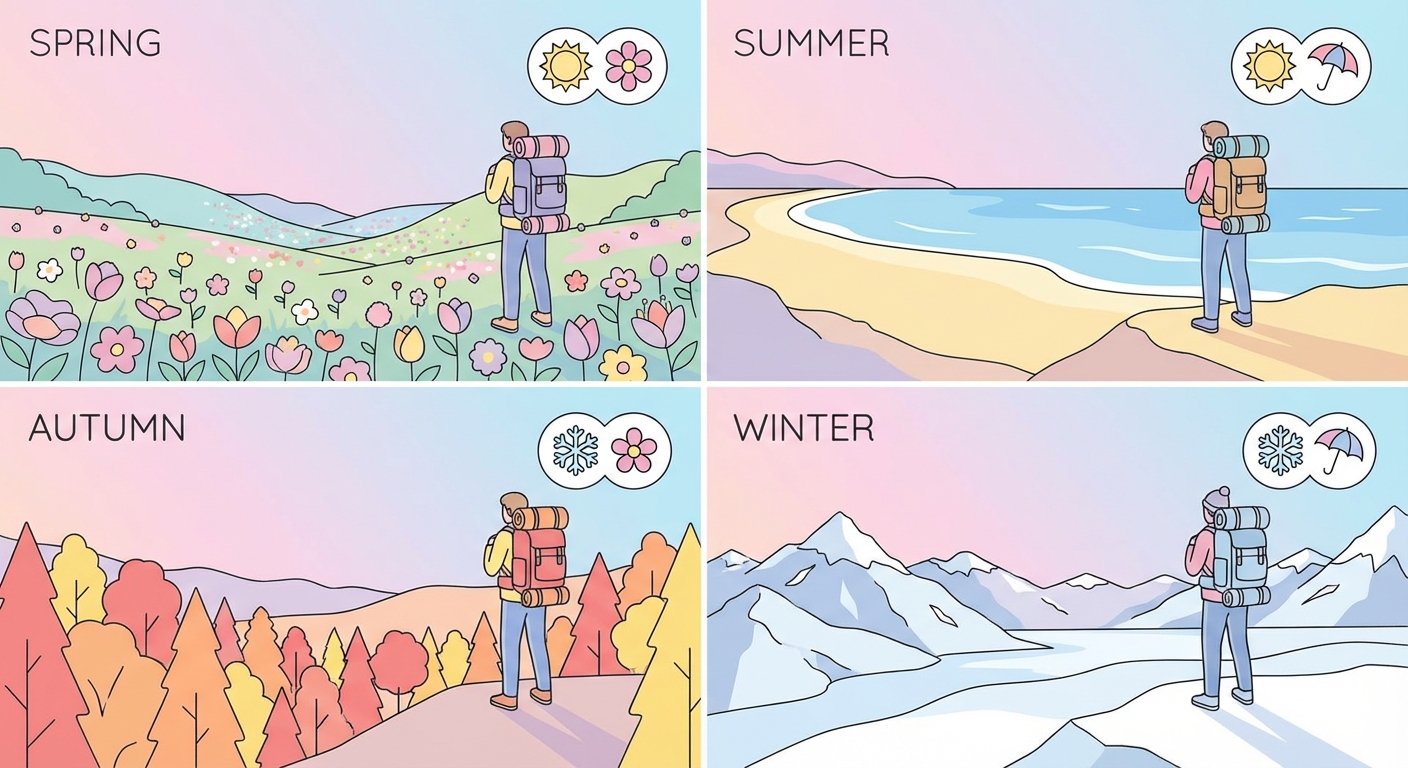
Summer brings scorching heat to most of Turkey, with temperatures in Istanbul and coastal areas reaching 28–32°C (82–90°F). Cappadocia and inland regions can exceed 35°C (95°F). Humidity along the coasts can be uncomfortable, especially in July and August. Rainfall is virtually non-existent, making this ideal for beach holidays but challenging for active sightseeing in midday heat.
Autumn (September–November)
September remains warm and relatively dry, perfect for beach visits and outdoor exploration. By October, temperatures drop to 20–25°C (68–77°F), creating ideal hiking conditions in Cappadocia and the Taurus Mountains. November brings occasional rain, but crowds thin considerably, and prices decrease significantly.
Winter (December–February)
Winter transforms Turkey into a quieter, more affordable destination. Coastal regions stay mild (10–15°C or 50–59°F), but Istanbul and central areas experience frost and occasional snow. The Black Sea coast receives substantial rainfall. Winter is ideal for visiting museums, bazaars, and enjoying hot Turkish tea without summer crowds.
Spring (March–May)
Spring is arguably Turkey's most beautiful season. Wildflowers blanket the countryside, temperatures range from 15–25°C (59–77°F), and rainfall decreases as May approaches. April brings Easter celebrations, while May marks the beginning of peak season. This is an excellent time for hiking, sightseeing, and photography.
Major Festivals and Events
Turkey's cultural calendar is packed with vibrant celebrations that showcase local traditions and modern culture.
- Istanbul International Film Festival (April) – One of Europe's most prestigious film festivals, showcasing Turkish and international cinema at venues across the city.
- Ramadan (varies) – Expect altered restaurant hours, evening festivities, and spiritual atmosphere, though non-Muslims can still navigate daily life comfortably.
- Kirkpinar Oil Wrestling Festival (July) – A 650-year-old tradition held in Edirne, featuring wrestlers in traditional leather costumes competing in authentic style.
- International Izmir Fair (August/September) – A month-long celebration featuring cultural performances, food, crafts, and fireworks along the Aegean coast.
- Cappadocia Hot Air Balloon Festival (October) – Hundreds of colorful balloons lift off at sunrise, creating a magical spectacle over fairy chimneys.
- Istanbul International Music Festival (June/July) – Classical performances in historic venues like the Topkapi Palace and Byzantine cisterns.
Peak vs. Off-Peak Travel
Peak Season (July–August, April–May)
Summer and late spring attract maximum visitors. Expect crowded tourist sites, higher accommodation prices, and longer waiting times at restaurants. However, all attractions operate at full capacity, weather is reliably sunny, and social calendars buzz with events. Book accommodations and tours well in advance.
Off-Peak Season (November–March)
Winter and early spring offer budget savings—sometimes 30–50% discounts on hotels. Crowds disappear from famous sites like Hagia Sophia and Pamukkale. Some attractions reduce hours or close temporarily. The trade-off is unpredictable weather, particularly on the Black Sea coast and in mountain regions.
Shoulder Seasons (September–October, March–May)
These periods offer the ideal balance: pleasant weather, manageable crowds, and reasonable prices. September–October is particularly excellent, with warm seas and crisp days ideal for exploration.
Month-by-Month Guide
January–February: Cold in Istanbul and central regions; mild on Mediterranean coast. Perfect for budget travelers and cultural exploration.
March–April: Spring blooms arrive; temperatures climb to 15–20°C. Easter celebrations add cultural