TLDR
- eSIM stores profiles on a separate embedded secure chip.
- iSIM integrates that secure function into the device’s main system chip.
- Both can support remote carrier-profile downloads.
- iSIM can reduce parts, board space, and power use.
- Device and carrier support still decide what a customer can activate.
The hardware location is the main difference
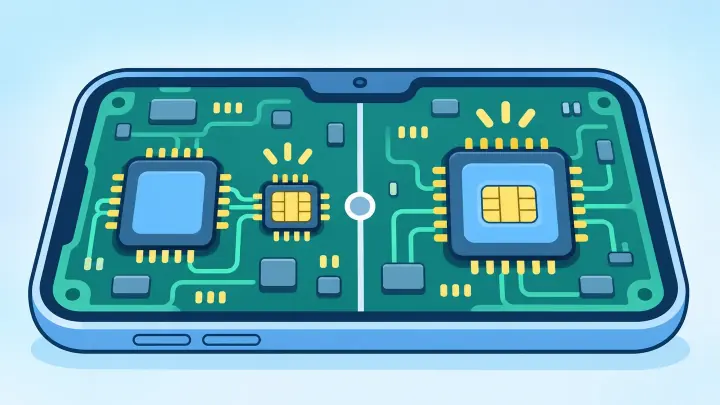
A traditional SIM is a removable plastic card with a secure chip. An eSIM, formally an embedded SIM, solders a dedicated secure component into the phone or connected device. The customer downloads a carrier profile instead of inserting a card.
An integrated SIM, or iSIM, places that secure SIM function inside a trusted area of the main system-on-chip. It no longer needs a separate eSIM component on the circuit board.
This is a hardware design difference. It does not mean that an iSIM is an internet calling app or a less real mobile identity. It still holds the credentials needed to authenticate with a carrier.
Remote profile management can feel similar
Both technologies can use standards-based remote provisioning. A carrier or travel provider sends a protected profile to the device, and the user selects it in software. There is no need to open a SIM tray.
From the traveler’s view, the setup may look almost identical. The customer scans a QR code, taps a carrier notification, or uses an app. The settings screen may simply call the line an eSIM even when deeper hardware integration is involved.
uPhone’s eSIM installation guide describes the user-facing process. The maker and carrier handle the secure hardware underneath.
iSIM removes one physical component
Moving the secure element into the main processor can free board space. That space is valuable in a watch, tracker, sensor, or compact phone. It may be used for a larger battery or a smaller device.
Fewer separate components can also reduce power use and simplify manufacturing. These gains are especially important for internet-connected sensors expected to run for years on small batteries.
Small savings matter at large scale
Removing one component from one phone sounds minor. Removing it from millions of utility meters, vehicles, or asset trackers can reduce materials and assembly work across an entire product line.
Both rely on protected environments
An eSIM’s dedicated chip protects carrier credentials. An iSIM uses a tamper-resistant trusted area within the main processor. Industry certification and carrier approval are important because the identity must remain isolated from normal apps and operating-system attacks.
Integration does not mean credentials sit openly beside photos and messages. The secure part follows separate controls. At the same time, no technology makes the whole phone immune to phishing, account theft, or bad passwords.
For travelers, normal safety habits still matter. Lock the device, protect the carrier account, and avoid sharing activation QR codes.
Phones are only one part of the use case
| Device | Why embedded connectivity helps |
|---|---|
| Smartphone | Switch plans without a plastic card |
| Smartwatch | Save space and stay connected away from a phone |
| Vehicle | Manage service remotely over a long life |
| Utility meter | Deploy sealed devices at large scale |
| Asset tracker | Reduce size and power needs |
iSIM is particularly attractive for small or mass-produced connected devices. eSIM already has broad support and remains a practical design for phones, tablets, watches, and machines.
Most travelers should focus on compatibility
A traveler normally cannot choose between eSIM and iSIM with a settings switch. The device maker chose the hardware before sale. What matters is whether the exact model supports the carrier profile and frequency bands.
Use uPhone’s device compatibility checker and confirm that the phone is unlocked. Then examine the provider’s coverage rather than searching for an iSIM plan label.
When moving service to another phone, follow the carrier’s supported process or uPhone’s transfer guide. The profile cannot be copied like an ordinary file.
eSIM is a separate chip while iSIM is built into the processor
Both technologies replace the need to handle a removable SIM for every change. eSIM keeps the secure function in its own embedded component. iSIM integrates it into the main chip to save more space, parts, and power.
For today’s traveler, support matters more than the label. For future watches, sensors, vehicles, and compact devices, iSIM’s deeper integration can make connected designs easier to build.