A Culinary Journey Through China: Must-Try Foods and Where to Find Them
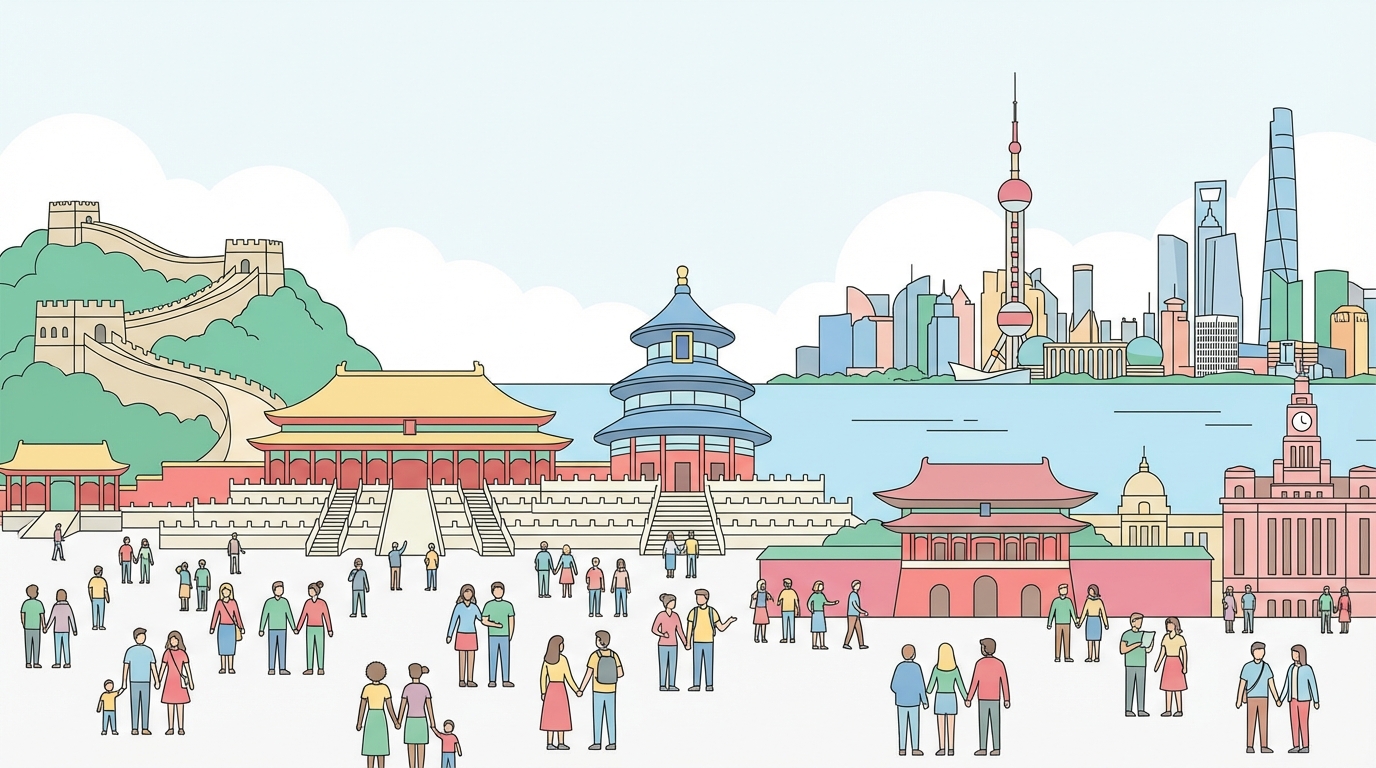
China is one of the world's most captivating destinations — a place where ancient dynasties and ultramodern skylines exist side by side. Yet beyond the sweeping steps of the Great Wall and neon-lit river promenades lies an equally magnificent world: Chinese cuisine. Eating your way across this vast country is not simply about satisfying hunger — it's a journey through eight distinct regional traditions, each with bold flavours, ancient cooking philosophies, and stories that span centuries. Whether you're a street food adventurer or a fine-dining explorer, China's culinary landscape will reshape how you think about food.
The Eight Traditions: A Map of Flavour
Chinese cuisine is not one cuisine — it is a mosaic. Cantonese cooking celebrates delicate steaming and the natural sweetness of ingredients. Sichuan cuisine sets your mouth aflame with mala spice — the numbing tingle of Sichuan peppercorns paired with fierce chilli heat. Hunan brings smoky, complex depth. Shanghai offers refinement and subtle richness. Each region tells a story through its food, and tasting them all is the ultimate way to understand China.
Iconic Dishes You Cannot Miss
Peking Duck (北京烤鸭) is the crown jewel of Beijing. Picture this: a whole duck, slow-roasted until the skin crackles like burnt sugar, served with paper-thin pancakes, spring onion, cucumber, and hoisin sauce. Wrap it all together and take a bite — it's transcendent. Hunt for it at established restaurants in the Chaoyang or Dongcheng districts. Expect to pay 150–300 RMB (£15–30) per duck, often shared between two people.
Xiaolongbao (小笼包) — Shanghai's legendary soup dumplings — are parcels of pure magic. Delicate wheat-flour wrappers encase pork filling and a rich gelatin broth that melts on your tongue the moment the dumpling hits the steam. The trick is to bite gently, sip the hot broth first, then eat the wrapper and filling. Visit a proper dumpling house in the Yu Garden area or Jing'an district. A basket of 4–6 dumplings costs 8–15 RMB (80p–£1.50) — absurdly good value.
Hot Pot (火锅) is a communal ritual. A bubbling broth simmers at your table — you choose: mild, numbing Sichuan, or fiery Chongqing style. Then you cook your own meal by dipping thinly sliced beef, lamb, seafood, tofu, mushrooms, and leafy greens into the broth. It's interactive, social, and utterly addictive. Chongqing's version, with its numbing Sichuan peppercorns, is unmissable. Expect 80–150 RMB (£8–15) per person at a casual restaurant.
Mapo Tofu (麻婆豆腐) is a Sichuan masterpiece — silken tofu swimming in a fiery sauce of chilli bean paste, fermented black beans, and those signature numbing Sichuan peppercorns. It looks terrifying. It tastes transcendent. A generous serving costs 15–25 RMB (£1.50–2.50).
Dan Dan Noodles (担担面) feature chewy wheat noodles tossed in a bold sesame-chilli sauce, topped with preserved vegetables and minced pork. It's street food elevated. Find them at noodle stalls throughout Chengdu — 10–20 RMB (£1–2) per bowl.
Dim Sum: A Thousand Bites of Joy
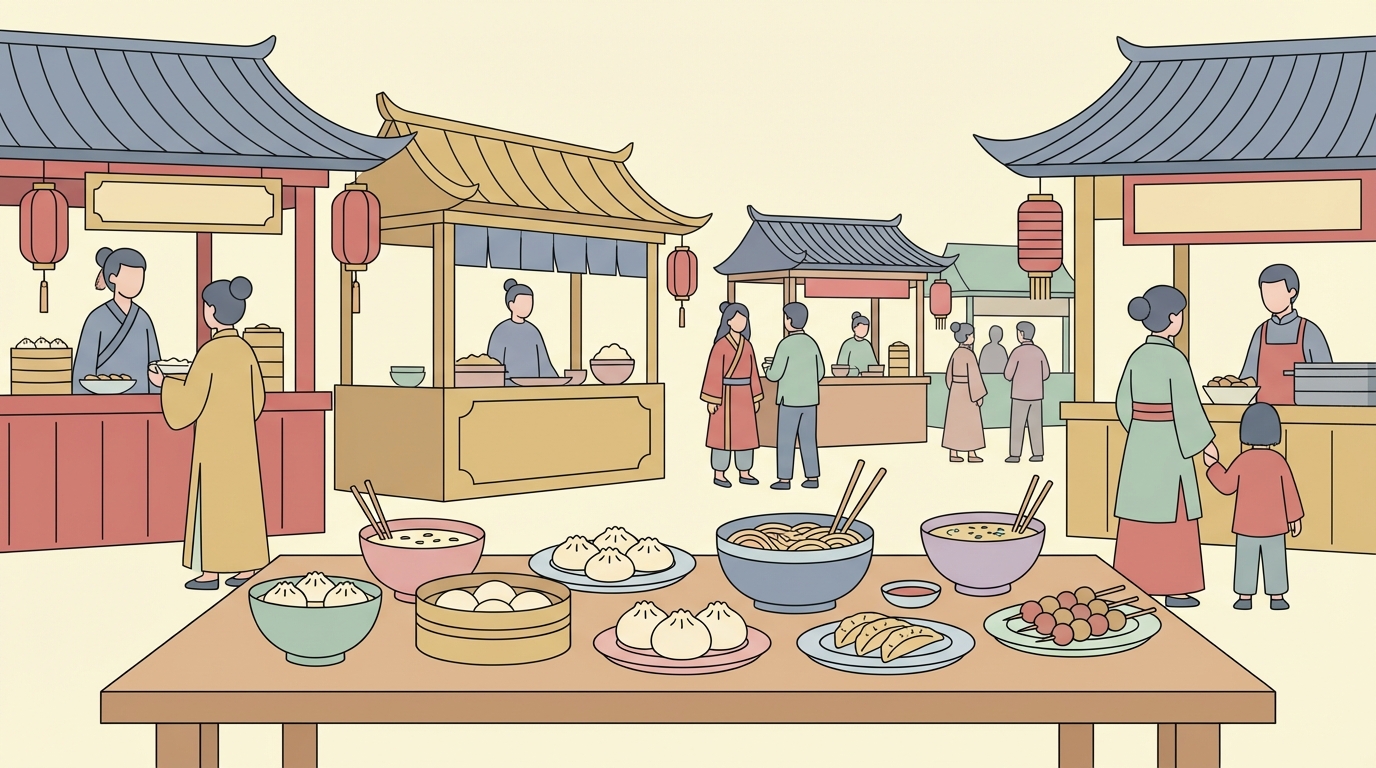
Head to Guangzhou or seek out authentic Hong Kong-style dim sum restaurants in major cities. These are not just snacks — they're an art form. Har gow (prawn dumplings), siu mai (pork and shrimp dumplings), egg tarts with crispy pastry and silky custard, turnip cake, and char siu bao (barbecued pork buns) arrive in bamboo steamers. Order by pointing at the trolley as it passes, or mark a menu sheet. Count on 100–200 RMB (£10–20) for a satisfying spread for two people.
Street Food Adventures
China's street food scene is where memories are made. Wander night markets in Beijing, Xi'an, Chengdu, or Shanghai and find stalls selling jianbing (Chinese savoury crepes), baozi (steamed buns), chuan (meat skewers grilled over charcoal), stinky tofu (fermented and utterly polarizing), and hand-pulled noodles. Most items cost 5–15 RMB (50p–£1.50). The adventure is in the discovery.
Food Markets Worth Exploring
Huimin Street in Xi'an is legendary for Muslim Chinese street food — lamb skewers, flatbread, and spiced noodles. Shanghai's Wujiang Road Snack Street packs a thousand flavours into one alleyway. Chengdu's Kuanzhai Xiangzi (Wide and Narrow Alleys) blend heritage architecture with modern restaurants and teahouses serving Sichuan specialities.
Stay Connected to Discover More
Navigating China's regional cuisines, finding hidden gem restaurants, and ordering confidently requires staying online. With an eSIM active in your phone, you'll have instant access to maps, translation apps, and restaurant reviews the moment you land — no roaming fees, no airport SIM queues. Stay connected, explore fearlessly, and eat your way through one of the world's greatest culinary destinations.