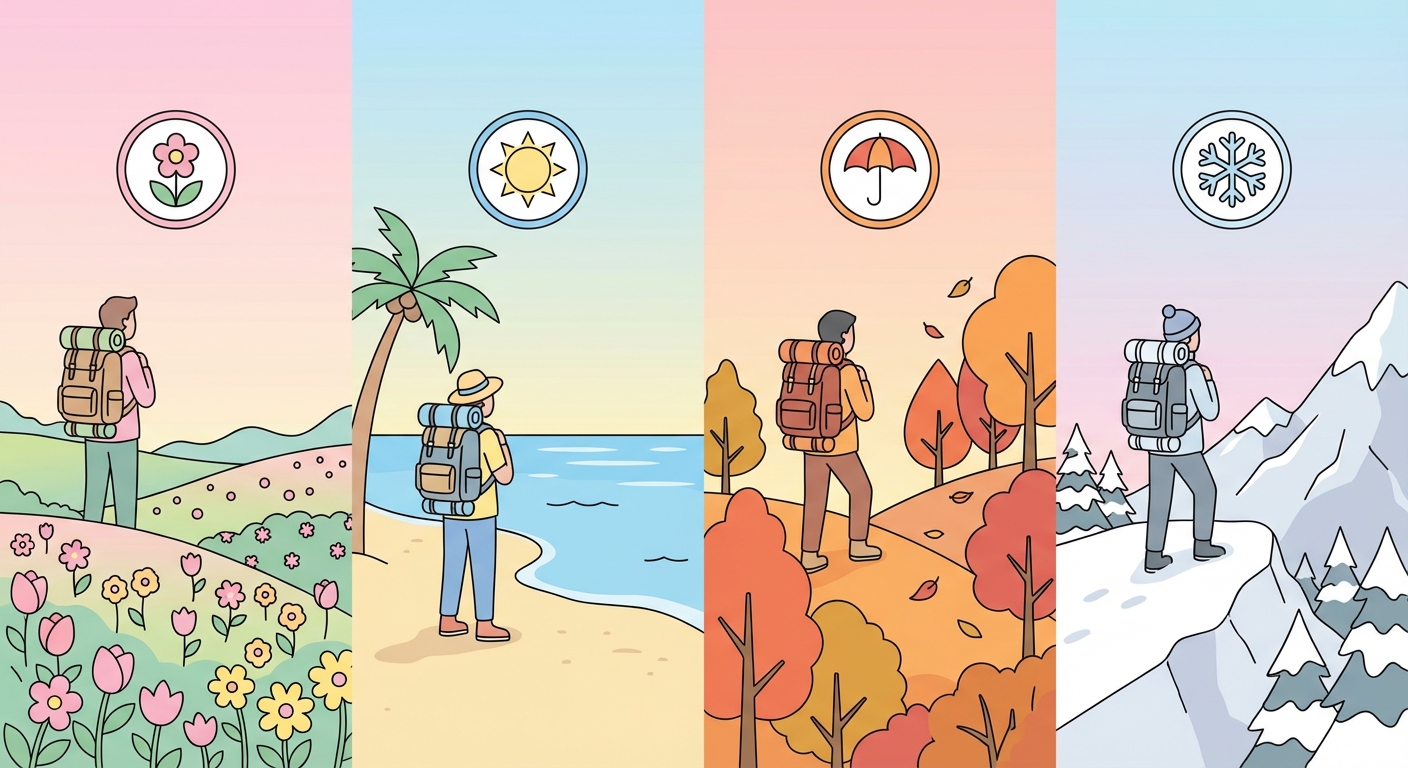
South Korea transforms dramatically with each season, offering distinct experiences that make timing your visit crucial. Whether you're chasing spring cherry blossoms in Seoul, enjoying summer festivals, experiencing autumn's crisp beauty, or embracing winter's festive charm, South Korea delivers something special year-round. Understanding the country's seasonal patterns, major festivals, and peak travel periods helps you plan the perfect Korean adventure—and makes deciding when to go much easier.
Seasonal Weather and What to Pack
South Korea experiences four distinct seasons, each with unique weather patterns that affect your travel experience.
Spring (March to May)
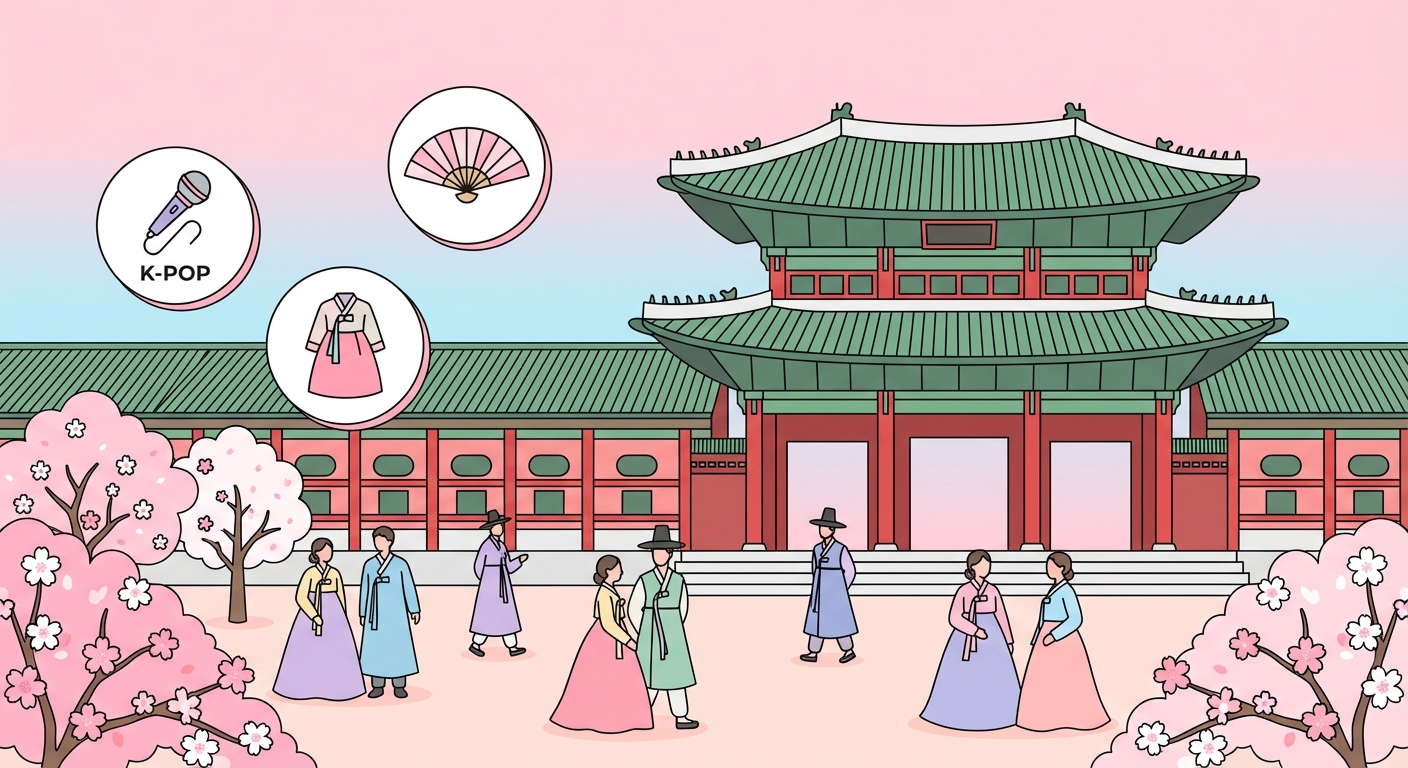
Spring is arguably South Korea's most beautiful season. Cherry blossoms explode across the country from late March through early April, transforming parks and temples into stunning pink wonderlands. Temperatures range from 10–20°C (50–68°F), so bring layers. Daegu's Jilwon Park and Seoul's Yeouido Park become Instagram-worthy destinations during cherry blossom season. Humidity is low, rainfall is moderate, and the weather is generally pleasant for exploring temples, hiking, and city tours.
Summer (June to August)
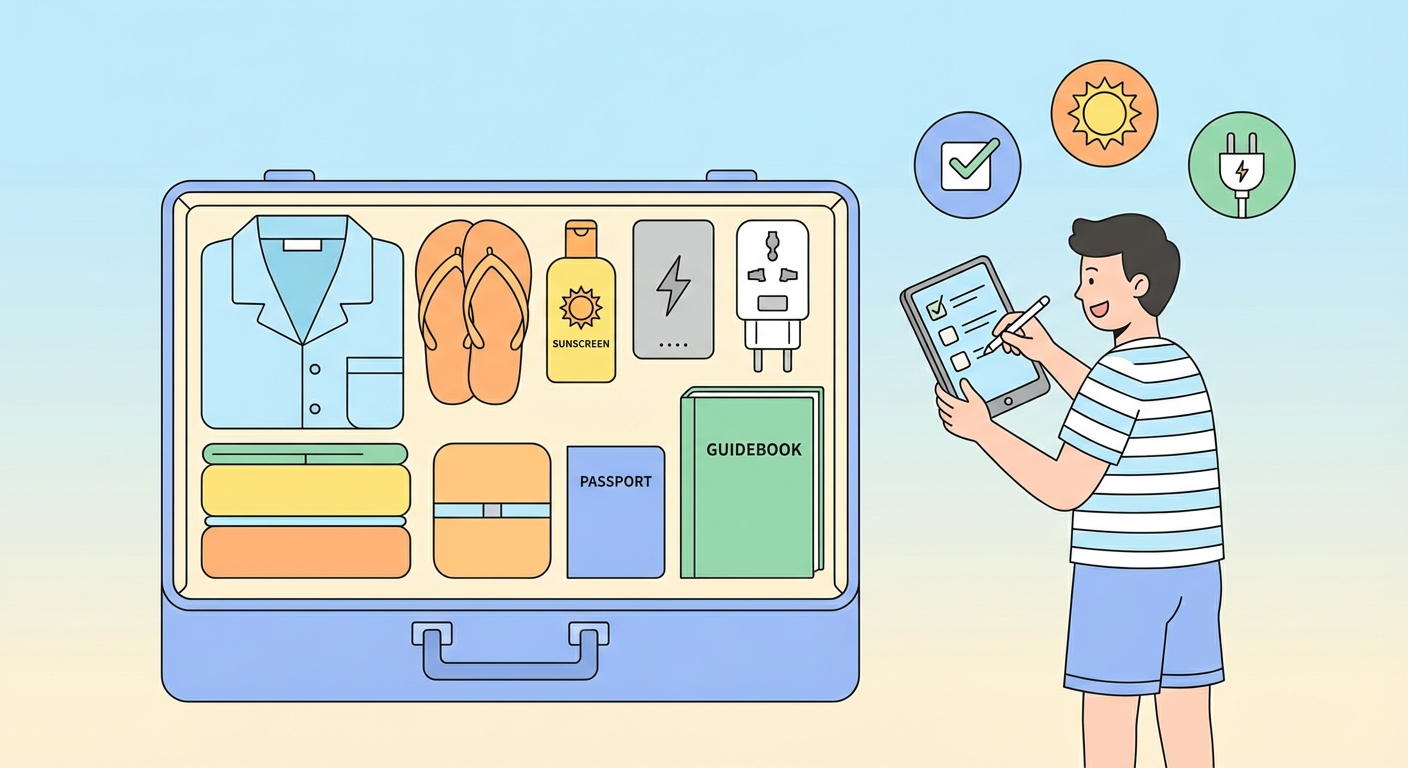
Summers are hot and humid, with temperatures reaching 25–30°C (77–86°F) and occasional heat waves pushing higher. June brings the rainy season (jangma), so pack an umbrella. July and August are peak tourism months despite the heat. Summer festivals dominate the cultural calendar, and beaches in Busan and the coastal islands become crowded. Light, breathable clothing and strong sunscreen are essential. Many locals escape to mountain temples and coastal areas for relief.
Autumn (September to November)
Many consider autumn the second-best season. Temperatures cool to 15–22°C (59–72°F), skies are clear, and foliage transitions from green to brilliant reds and golds. This is ideal hiking weather. Popular spots like Seoraksan National Park and the temples of Gyeongju showcase incredible colors from October onwards. Bring a light jacket and comfortable walking shoes. The season extends from September through November, offering several months of ideal conditions.
Winter (December to February)
Winters are cold and dry, with temperatures dropping to –5–5°C (23–41°F). Northern regions and high-altitude areas receive snow, making this prime season for ski resorts like Pyeongchang. Seoul rarely experiences heavy snow, but the city glows beautifully with holiday decorations. Christmas markets and winter festivals create festive atmospheres. Pack thermal layers, a heavy coat, and warm accessories. Winter is the cheapest season for accommodations and flights.
Festivals and Cultural Events Throughout the Year
South Korea's festival calendar is packed with exciting events. The Hwacheon Trout Festival (January) draws ice-fishing enthusiasts to frozen streams. Spring brings the Jinhae Cherry Blossom Festival (late March to early April) in Busan, with night illuminations and food stalls. The Boryeong Mud Festival (mid-July) offers quirky fun with mud wrestling, slides, and performances. Summer also features the Seoul Jazz Festival and countless local food and temple festivals. Autumn brings the Busan International Film Festival (October) and countless harvest celebrations. Winter transforms cities with Christmas markets and New Year's countdown events, particularly at Seoul's Myeongdong district and Namsan Tower.
Peak vs. Off-Peak: Timing Your Visit
Peak Season (April to May, July to August, October to November): Expect crowds at major attractions, fully booked accommodations, and higher prices. Spring cherry blossoms and autumn foliage periods are busiest. Summer vacation months draw families. Prices can increase 30–50% during these periods.
Off-Peak Season (December to February, June, September): Lower prices, shorter queues, and more authentic local experiences. Winter offers the best accommodation deals. Rainy June is quietest. You'll interact more genuinely with locals and enjoy temples and museums without massive crowds.
Month-by-Month Travel Guide
- January–February: Snow skiing, winter festivals, lowest prices, cold weather
- March–April: Cherry blossoms, mild temperatures, peak crowds, festival season
- May: Pleasant weather, fading crowds, end of spring festivals
- June: Rainy season, fewer tourists, lower prices, lush greenery
- July–August: Beach season, summer festivals, extreme heat, highest prices and crowds
- September: Late summer, cooling temperatures, good weather, moderate crowds
- October–November: Autumn foliage, crisp weather, peak crowds again, harvest festivals