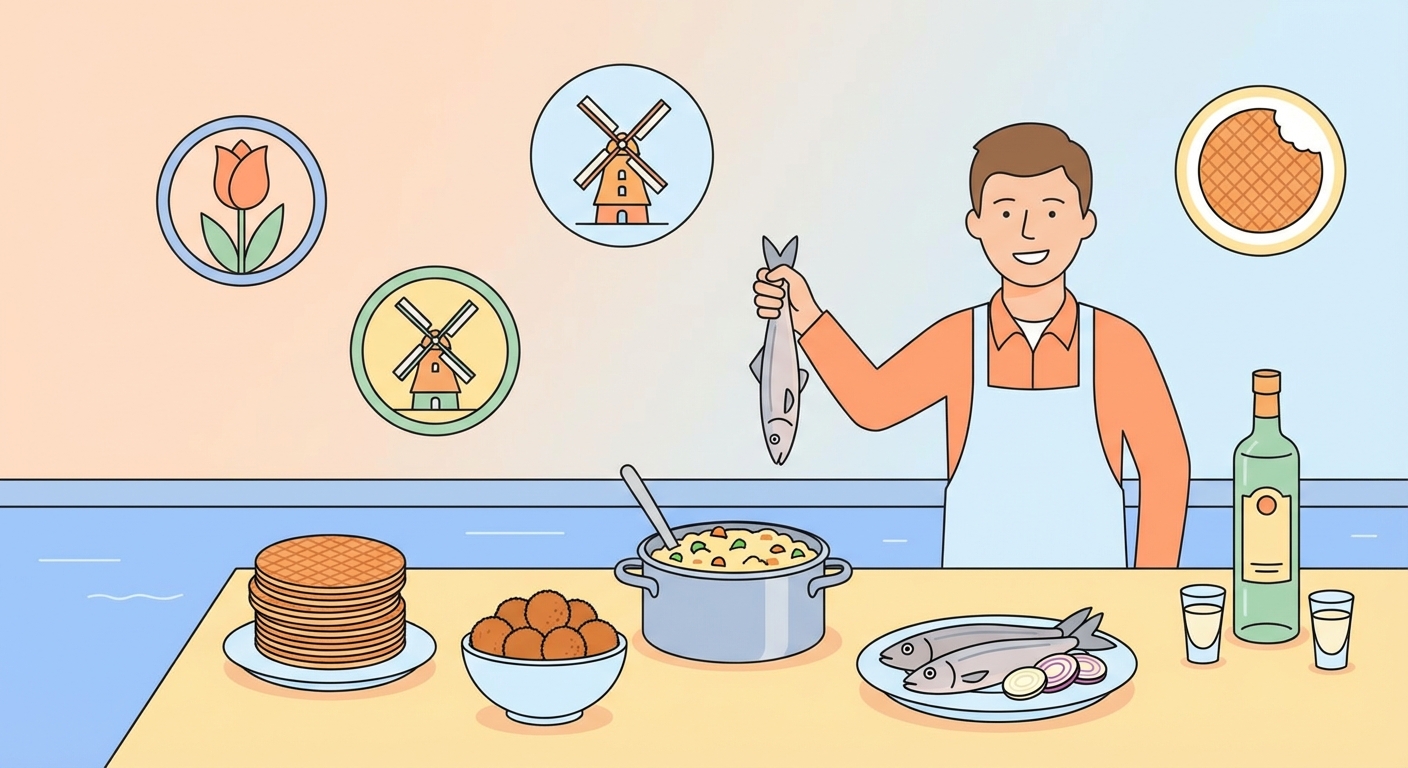
The Netherlands might be known for windmills and tulips, but its food culture deserves equal attention. Dutch cuisine is hearty, unpretentious, and deeply rooted in tradition—think comfort food elevated by quality ingredients and clever preparation. Whether you're exploring Amsterdam's bustling food markets or sampling street food in smaller cities, you'll discover that Dutch food tells stories of the nation's agricultural heritage and multicultural influences. This guide covers the iconic dishes, street food, and dining experiences that define eating in the Netherlands.
Iconic Dutch Dishes You Must Try
No visit to the Netherlands is complete without tasting its signature dishes. Stroopwafels—thin waffle cookies with caramel syrup in the middle—are ubiquitous and beloved. The best way to enjoy them is warm, placed over a hot cup of coffee so the caramel softens. You'll find fresh stroopwafels at Albert Cuyp Market in Amsterdam and local bakeries throughout the country.
Bitterballen are another national treasure: crispy, fried meat ragout balls served with mustard as an appetizer or snack. Poffertjes—fluffy mini pancakes dusted with powdered sugar—are equally iconic. For a more substantial meal, try hutspot, a comforting mashed potato dish mixed with vegetables and served with sausage, or stamppot, a traditional potato-based dish with various vegetable combinations.
Cheese is fundamental to Dutch food culture. Beyond the famous Edam and Gouda varieties, explore aged versions at dedicated cheese shops. The Dutch consume more cheese per capita than almost any other nation, and tasting artisanal producers' creations reveals why. Visit Cheese Museum in Edam or local cheese markets like Alkmaar's famous Friday morning market to see cheese trading traditions and sample regional varieties.
Street Food and Market Eats
Dutch street food is unpretentious but satisfying. Patat (thick-cut fries) served with various sauces—mayonnaise, curry ketchup, or peanut sauce—are a snacking staple found at frituren (fried food stands) across the country. Kibbeling, battered and fried fish pieces, is popular seafood street food, especially in coastal towns.
Market visits reveal the Netherlands' food culture authentically. Albert Cuyp Market in Amsterdam operates year-round with over 100 stalls selling fresh produce, international foods, and Dutch snacks. Scan QR codes at stalls using your phone to pay contactlessly—having reliable data through an eSIM from uPhone makes mobile payments seamless and allows you to quickly research vendors or find navigation to markets while exploring food neighborhoods.
Don't miss poffertjes stands at outdoor markets, fresh herring from seafood vendors, or kroket (croquette) stands selling cheese-filled or meat-filled fried cylinders. In spring, sample white asparagus at markets and specialty restaurants—it's celebrated as a seasonal delicacy with dedicated menus throughout April and May.
Regional Specialties Across the Country
Each region boasts distinctive specialties. In the south, near Belgium, try Limburgse vlai (fruit pie with custard) and locally made liver sausage. Friesland, the northern province, is famous for Frisian tea, a rich blend traditionally served with biscuits, and for Bûterbabke, a buttery cake.
Coastal regions celebrate fresh fish traditions. Scheveningen near The Hague is renowned for fresh herring eaten with onions and pickles. The IJsselmeer region specializes in eel dishes, both smoked and grilled. Amsterdam and other cities feature Indonesian cuisine—a legacy of colonial history—with rijsttafel (rice table) experiences offering multiple small dishes in one meal.
Where to Eat: Restaurants and Traditional Settings
From casual eateries to fine dining, the Netherlands offers diverse experiences. Eateries called bruin cafés (brown cafés) serve traditional Dutch food in cozy, wood-paneled settings. Café de Jaren in Amsterdam combines food, canal views, and authentic atmosphere. For fine dining, seek Michelin-starred restaurants that reimagine traditional Dutch cuisine with modern techniques.
For authentic experiences, visit family-run restaurants in smaller cities, pancake houses (pannenkoekenhuis) serving sweet and savory varieties, and gezelligheid—the quintessentially Dutch concept of cozy togetherness—in local establishments. Before dining out, use your eSIM data to check restaurant hours, make reservations, and read reviews to maximize your culinary experiences.
Eating in the Netherlands means embracing straightforward, flavorful food celebrating quality ingredients and tradition. Whether enjoying street food or formal dining, you'll understand why the Dutch take pride in their culinary heritage.