Greece rewards the prepared traveller. The country offers exceptional value, but the classic budget traps—peak-season island ferries, overpriced harbourfront restaurants, and inefficient transport choices—can quickly erode your savings. This guide covers the operational details of travelling Greece on a tight to moderate budget, with clear trade-offs and specific cost anchors.
Daily Budget Bands (per person)
These estimates assume a mix of self-catering and inexpensive meals, public transport or ferry deck class, and one paid attraction every other day. Prices are for 2026 high season (June–September) on popular islands; mainland and shoulder season are 20–30% lower.
- Frugal (€55–70/day): Dorm bed or hostel private room in a less central neighbourhood, supermarket picnics and street souvlaki, local bus and foot travel, free archaeological sites and beaches.
- Moderate (€75–110/day): Budget hotel double or well-rated Airbnb, one taverna meal with house wine, a guided site or museum ticket, occasional taxi or ferry upgrade.
- Comfortable (€120–160/day): Mid-range hotel with pool or sea view, daily restaurant meals with appetisers, ferry cabin or rental scooter, multiple paid attractions.
Accommodation: Where to Sleep Without Overspending
Book directly through the property’s website when possible—many family-run pensions and hostels offer a 5–10% discount over booking platforms. In Athens, neighbourhoods like Exarchia, Koukaki, or Metaxourgeio have budget doubles for €40–60. On islands, stay a 20-minute walk inland from the port; waterfront rooms cost double for the same quality.
Hostels are common in Athens, Thessaloniki, Crete, and Santorini, with dorm beds from €18–30. For €35–50, a private room in a guesthouse (often called a “pension” or oikiako) gives more privacy and often includes a simple breakfast. In remote areas and small Cycladic islands, check for rooms in family homes—they are rarely listed online, so ask at the local bakery or mini-market on arrival.
Where spending more helps: On Santorini, Mykonos, and Hydra, budget accommodation is scarce and often shabby. Raising your budget to €100/night in these places buys a clean, air-conditioned room within walking distance of the main town—worth the premium for comfort and time saved.
Food and Drink: Eating Well for Less
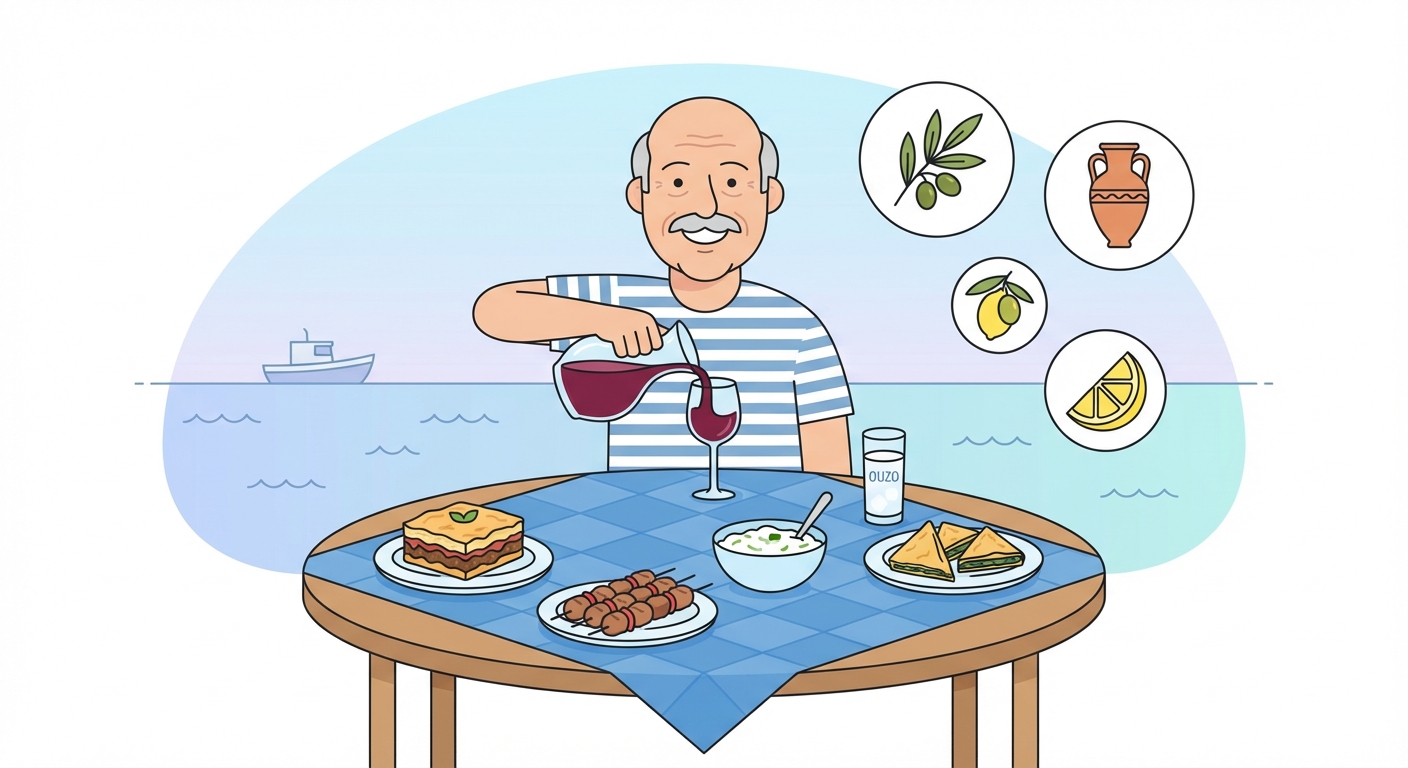
The classic budget move—a gyros pita (€2.50–4.00) or souvlaki stick (€1.50–2.50) from a street stand—remains the best value meal in Greece. For a sit-down meal, skip the tourist menus with photos and look for a taverna where the menu is handwritten and the clientele is local. A main dish of grilled fish or lamb with a side of horiatiki (Greek salad) and a half-litre of house wine runs €12–18.
Supermarket staples: feta cheese (€3–5 per 200g), olives, fresh bread, tomatoes, and yoghurt make excellent picnic supplies. Tap water is safe in most cities and islands (though sometimes salty-tasting on small islands—buy a 1.5L bottle for €0.50). Coffee at a kafenio is €1.50–2.50 for a freddo cappuccino; tourist-café chains charge double.
Where spending more helps: On the less-touristed islands (e.g., Ikaria, Syros, Naxos, or the northern Sporades), a €20–25 taverna dinner often includes a complimentary dessert or a small carafe of raki. Splurging on that meal supports the local economy and gives you a genuine seasonal menu—cheap options there are often limited to pizza and convenience food.
Local Transport: Getting Around on a Budget
The intercity bus network (KTEL) covers the mainland thoroughly and cheaply: Athens to Delphi (2.5 h) costs about €15; Athens to Thessaloniki (5.5 h) around €35. Book tickets at the station or online—no need to print. Trains are slower but scenic on the Peloponnese route (Athens–Patras, 4 h, €25).
Ferries are the biggest variable. Book at least two weeks ahead for summer; use the deck class (no cabin, sit in the lounge or on deck) for the cheapest fare. For example, the high-speed ferry from Piraeus to Santorini in July is about €55 deck class; a cabin adds €40–60. On overnight routes (e.g., Athens–Crete), the deck fare is €35–45 and includes a seat in the air-conditioned lounge; bring a sleeping bag and earplugs. Avoid same-day ticket counters at busy ports—they charge a premium.
Local buses on islands cost €1.50–3.00 per ride. A scooter rental is €25–35/day but requires a valid licence and caution on winding roads. Taxis are metered but often negotiate flat rates for island trips—agree the price before getting in.
Attractions: Admission and Free Days
Major archaeological sites and museums charge €6–15. The comprehensive ticket for Athens’s Acropolis and its slopes is €20 (reduced €10). Many state-run sites offer free admission on the first Sunday of the month from November to March, and on specific dates (e.g., 18 April, 18 May, and the last weekend of September). Check the Greek Ministry of Culture website before you go.
For a budget-friendly alternative, walk the perimeter of the Acropolis (the Panathenaic Way is free) or visit the Ancient Agora (€8) instead of the Acropolis Museum (€10). On islands, hiking trails (e.g., the Minoan Gorge in Crete, the coastal path on Serifos) cost nothing and offer spectacular views.
Where spending more helps: Guided tours at major sites (€30–50 for a 2-hour small-group tour) are worth the money if you lack a good guidebook. You will learn context that transforms the experience from “old rocks” to a vivid historical picture. Free audio guides are rarely available.
Payment Habits: Cash and Cards
Greece is no longer cash-only, but small tavernas, bakeries, and island kiosks still prefer cash. Carry €50–100 in small denominations (€5, €10, €20). Visa and Mastercard are accepted at most hotels, larger restaurants, and museums. American Express is uncommon. ATMs are plentiful in cities and on popular islands; withdrawal fees are typically €2–5, so take out larger sums less often.
For mobile data on the road, a Greece eSIM is the most flexible option—purchase and activate it before you arrive, or immediately at Athens airport. It avoids hunting for a physical SIM card and works across the islands without roaming fees.
Tipping: What Is Expected
Tipping is modest. Round up the bill at a taverna (e.g., leave €1–2 on a €15 meal). For exceptional service, 5–10% is generous but not required. Taxi drivers appreciate rounding up to the nearest euro. Hotel and tour guides: €2–5 per person for a day tour is fine. Never tip in coins—it is considered rude.
Practical Cautions
- Strikes: Public transport and ferry strikes happen periodically (often on Tuesdays or Thursdays). Check local news the day before travel, and have a backup plan.
- Seasonal closures: Many island ferries and small museums operate on reduced schedules from November to March. Verify online before heading out.
- Water: Tap water is safe in Athens and most mainland areas, but avoid drinking from taps on small Cycladic islands (e.g., Sifnos, Folegandros) unless the host says it is desalinated.
- Sun and heat: From June to September, avoid sightseeing between 13:00 and 16:00. Many archaeological sites have limited shade—bring a hat, sunscreen, and a refillable bottle.
Greece remains one of Europe’s most rewarding budget destinations when you match your expectations to the season and location. A frugal traveller can see the Acropolis, swim in the Aegean, and eat grilled octopus for under €70/day. The key is planning ahead, staying flexible, and knowing where a small extra spend—on a guided tour, a decent room, or a meal in a genuine taverna—turns a good trip into a memorable one.