China’s transport network is vast, modern, and increasingly efficient, but navigating it requires advance knowledge of payment systems, language barriers, and regional quirks. This guide covers arrival airports, intercity travel, local public transport, ticketing and payment, taxis and ride-hailing, driving considerations, and accessibility cautions. Plans are subject to change, so always verify schedules and visa requirements before departure.
Arrival Airports
Most international visitors enter through one of three major hubs: Beijing Capital (PEK) or Beijing Daxing (PKX), Shanghai Pudong (PVG) or Shanghai Hongqiao (SHA), and Guangzhou Baiyun (CAN). Secondary gateways include Chengdu Tianfu (TFU), Shenzhen Bao’an (SZX), and Hong Kong International (HKG). All have direct metro or airport express links to city centres. For example, Shanghai’s Maglev train connects Pudong to the metro system in about 8 minutes. From Beijing Capital, the Airport Express reaches downtown in 20–30 minutes; from Beijing Daxing, the Daxing Airport Express takes roughly 30 minutes to the city centre.
Intercity Travel
High-Speed Rail
China’s high-speed rail network (G and D trains) is the backbone of intercity travel. Trains are punctual, clean, and generally faster than flying for distances under 800 km. Book tickets through the official app or website (in Chinese) or via authorised third-party platforms that support English. Tickets can also be purchased at station counters, but expect queues and limited English. Popular routes include Beijing–Shanghai (4.5 hours), Shanghai–Hangzhou (1 hour), and Guangzhou–Shenzhen (1 hour). Second-class seats (er deng zuò) are the best value; first-class offers more legroom.
Flights
For longer distances (e.g., Beijing–Guangzhou, Shanghai–Chengdu), domestic flights are competitive with high-speed rail. Airlines such as China Southern, China Eastern, and Air China operate frequent services. Budget carriers (e.g., Spring Airlines) are cheaper but often have stricter baggage policies. Note that domestic flights are subject to weather delays, especially in foggy seasons.
Long-Distance Buses
Buses are the cheapest option for routes not served by rail, particularly in western regions (e.g., Chengdu–Lhasa, but Tibet requires special permits). Buses can be slow and less comfortable; avoid night buses on mountainous roads. Purchase tickets at bus stations or through travel agencies.
Local Public Transport
Metro Systems
Major cities (Beijing, Shanghai, Guangzhou, Shenzhen, Chengdu, etc.) have extensive metro networks with English signage and announcements. Fares are low (typically ¥3–10 per trip). Use a reloadable transit card (e.g., Shanghai’s “Shanghai Pass” or Beijing’s “Yikatong”) or a mobile payment app (Alipay or WeChat Pay) to tap in and out. Many metro lines now accept foreign credit cards at ticket machines, but it’s safer to carry cash or a local payment method.
Buses
City buses are cheap (¥1–2) but can be confusing for non-Chinese speakers as routes are primarily in Chinese. Some cities have English on bus stop signs, but not all. Use Google Maps or a local app (e.g., Moovit) for route planning. Tap your transit card or scan a QR code when boarding.
Ride-Hailing and Taxis
Ride-hailing apps like DiDi (the dominant service) are widespread and often cheaper than taxis. Download the DiDi app and link a foreign credit card or use Alipay for payment. Taxis are metered, but communication can be difficult; have your destination written in Chinese. Avoid unlicensed street taxis. Fares start at about ¥10–15 in most cities.
Tickets and Payment
China is nearly cashless. Most transactions use Alipay or WeChat Pay, which can be linked to international credit cards (though setup may require a Chinese bank account or a temporary verification). For short-term visitors, consider a prepaid travel card (e.g., from a local bank or a specialist provider) or simply use cash. Many metro ticket machines now accept foreign credit cards, but not all. For high-speed rail, book online in advance; last-minute tickets may be sold out on popular routes. Keep your passport handy for ticket purchase and inspection.
Driving Trade-Offs
Renting a car is rarely recommended for visitors. China requires a Chinese driving permit, which is not issued to foreign tourists; only an International Driving Permit (IDP) is recognised in some jurisdictions, but enforcement is inconsistent. Traffic rules are often ignored, road signs are in Chinese, and parking is scarce in cities. For rural or remote areas, a private driver (booked through a travel agency) is safer and more practical. Alternatively, use high-speed rail and local taxis.
Accessibility Cautions
Accessibility varies widely. Older metro stations may lack elevators or tactile guidance; newer stations (especially in Shanghai and Beijing) are better. Many buses are not wheelchair-accessible. Taxis rarely accommodate wheelchairs. For travellers with mobility issues, plan routes using accessible metro lines and book accessible hotel rooms in advance. Sidewalks can be uneven, and curb cuts are inconsistent. Contact local disability organisations or your hotel for specific advice.
Practical Tips
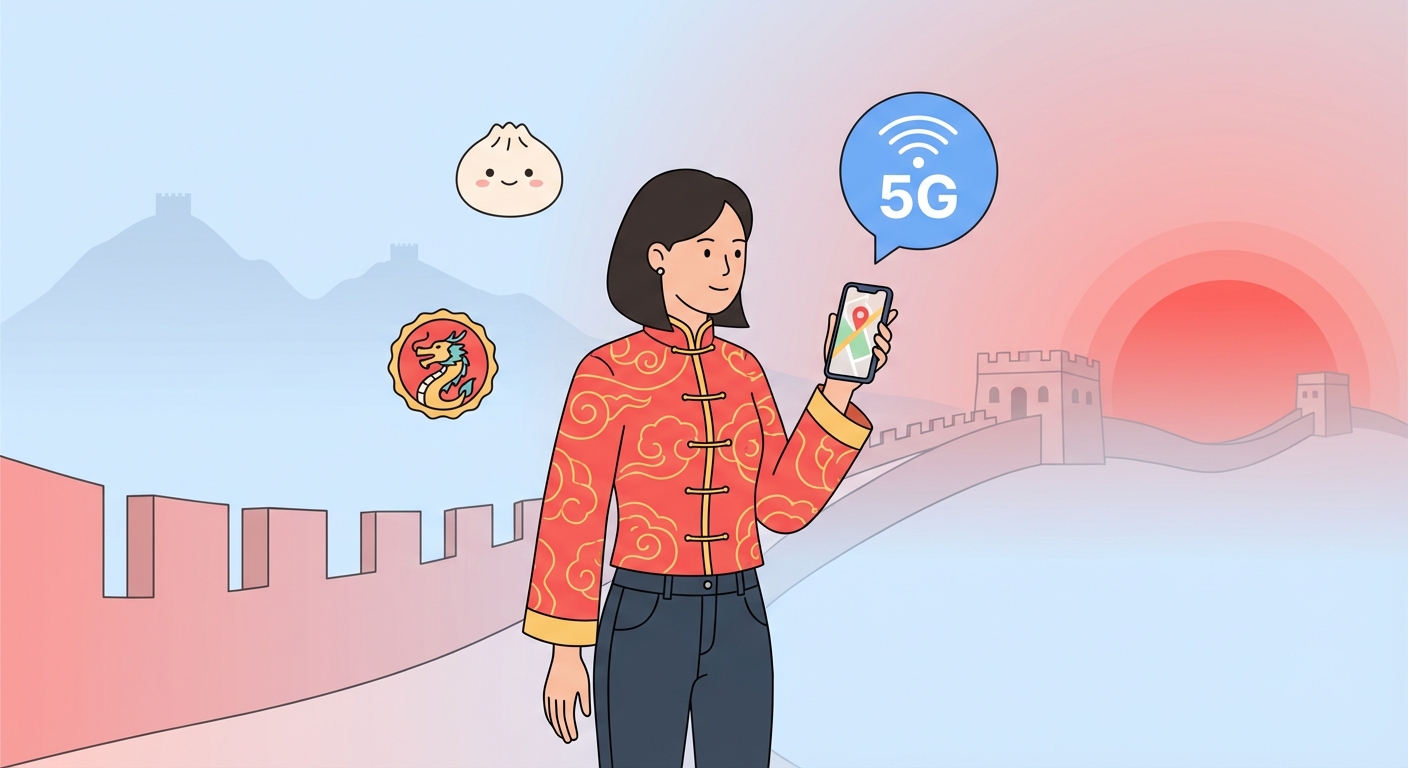
- Arrange mobile data before departure. A China eSIM from a provider like Airalo or a local carrier (China Unicom, China Mobile) lets you connect immediately upon landing. Download the app and activate before you travel.
- Download offline maps (e.g., Maps.me) in case Google Maps is slow. Baidu Maps (in Chinese) is more accurate for local navigation.
- Keep small bills (¥10, ¥20) for taxis and street vendors. Many small shops do not accept cards.
- Learn basic Chinese phrases for transport: “zhè lǐ” (here), “duō shǎo qián” (how much), and “xiè xiè” (thank you).
- Check visa requirements well in advance. A tourist visa (L visa) is required for most nationalities; some regions (e.g., Tibet) need additional permits.
China’s transport system rewards preparation. With a working payment method, a good map app, and a flexible attitude, getting around is straightforward. The high-speed rail network alone makes intercity travel a pleasure, while metro systems keep city exploration efficient. Avoid driving unless absolutely necessary, and always confirm schedules and payment compatibility before you travel.