Taiwan's diverse climate and year-round festivals make it a destination worth visiting any time, but knowing what to expect month by month helps you plan the perfect trip. From typhoon season to lunar celebrations, this subtropical island offers distinct experiences depending on when you travel. Whether you're chasing cherry blossoms in winter or lantern festivals in spring, understanding Taiwan's seasonal patterns ensures you'll pack the right gear and catch the events that matter most.
Seasonal Weather Patterns in Taiwan
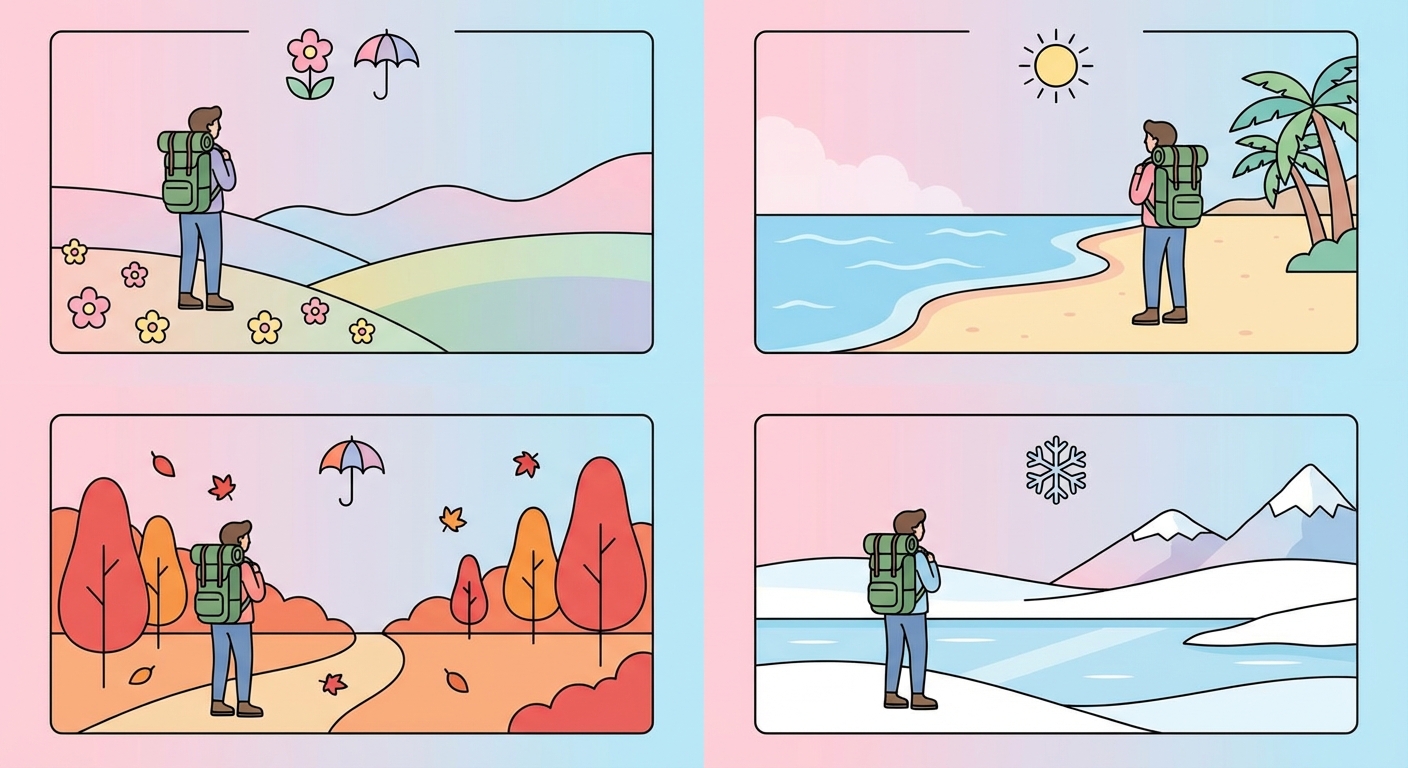
Taiwan experiences four distinct seasons, though winters are mild compared to temperate climates. The island sits in a subtropical to tropical zone, so even winter temperatures rarely dip below 10°C (50°F) in the lowlands.
Spring (March–May)
Spring brings warm days (20–28°C / 68–82°F), occasional rain, and blooming flowers throughout the island. It's an excellent time to visit Alishan for cherry blossoms in early April or explore the tea plantations of Nantou Prefecture. Humidity begins climbing toward the end of spring.
Summer (June–August)
Summer is hot and humid (28–35°C / 82–95°F) with frequent afternoon thunderstorms. This season also marks the start of typhoon season, which peaks in July and August. Beach activities are possible, but monitor weather forecasts closely. Mountain hiking is better in early June before peak heat and storms arrive.
Autumn (September–November)
Autumn offers the most pleasant weather of the year—mild temperatures (20–28°C / 68–82°F), lower humidity, and clear skies. Early autumn still sees occasional typhoons, but by October the weather stabilizes. This is peak tourist season, so expect larger crowds and higher prices.
Winter (December–February)
Winters are cool (10–20°C / 50–68°F) with periodic rain in the north, while southern Taiwan remains warm and dry. Snow occasionally falls in high mountain areas above 3,000 meters. Plum blossoms bloom in January and February around Alishan and Miaoli County.
Peak vs. Off-Peak Travel Seasons
Peak Season (October–November and December–February)
Taiwan's peak seasons align with autumn's ideal weather and the winter holiday period. Hotel rates surge, popular attractions become crowded, and restaurant reservations fill up quickly. If you travel during peak season, book accommodations weeks in advance. The tradeoff is excellent weather and vibrant festivals like the Taipei Lantern Festival in February.
Off-Peak Season (June–August)
Summer offers budget-conscious travelers lower prices on hotels and flights, plus shorter queues at major attractions. The downside: oppressive heat, humidity, and typhoon risks. If you choose summer travel, stay in air-conditioned accommodations, plan indoor activities like museum visits, and maintain flexible itineraries in case storms force schedule changes.
Shoulder Seasons (March–May and September)
Spring and early autumn provide a sweet spot—pleasant weather, moderate crowds, and mid-range prices. These periods are ideal for outdoor activities like hiking Jiufen Old Street or exploring the coastal beauty of Jiaoxi Hot Springs.
Month-by-Month Festival Calendar
Taiwan's festival calendar reflects Chinese traditions, indigenous celebrations, and modern events. January and February feature the Taipei Lantern Festival, Taiwan's most spectacular nighttime celebration with elaborate lantern installations illuminating Taipei's streets. March brings the Pingxi Sky Lantern Festival, where thousands of glowing paper lanterns float into the night sky. Summer sees the Dragon Boat Festival (June), featuring colorful boat races and sticky rice dumplings (zongzi). Autumn brings the Mid-Autumn Festival (September/October) with mooncakes and family gatherings. December hosts Christmas markets and year-end celebrations, especially lively in Taipei and Taichung.
Practical Tips for Any Season
Pack layers regardless of season—indoor air conditioning is intense in Taiwan. Bring an umbrella or rain jacket; brief downpours are common. For navigating attractions and looking up real-time festival information, reliable mobile connectivity is essential. Consider grabbing an eSIM from uPhone before arrival; it provides affordable data access without the hassle of finding local SIM cards or dealing with roaming charges.
Whether you prefer the cool clarity of autumn hikes, the festive energy of winter celebrations, or the peaceful solitude of summer's quieter months, Taiwan rewards visitors who plan around its seasonal rhythms.