France is a year-round destination, but the best time to visit depends on your priorities. Whether you're chasing lavender fields in Provence, sampling wine in Bordeaux, or exploring Paris museums, understanding France's seasonal rhythms will help you plan the perfect trip. From mild winters to sun-soaked summers, each season offers distinct advantages—and trade-offs.
France by Season: Weather and Climate
France enjoys a temperate climate, though conditions vary by region. The Mediterranean south is warmer and drier, while the Atlantic coast and northern regions experience cooler, wetter conditions.
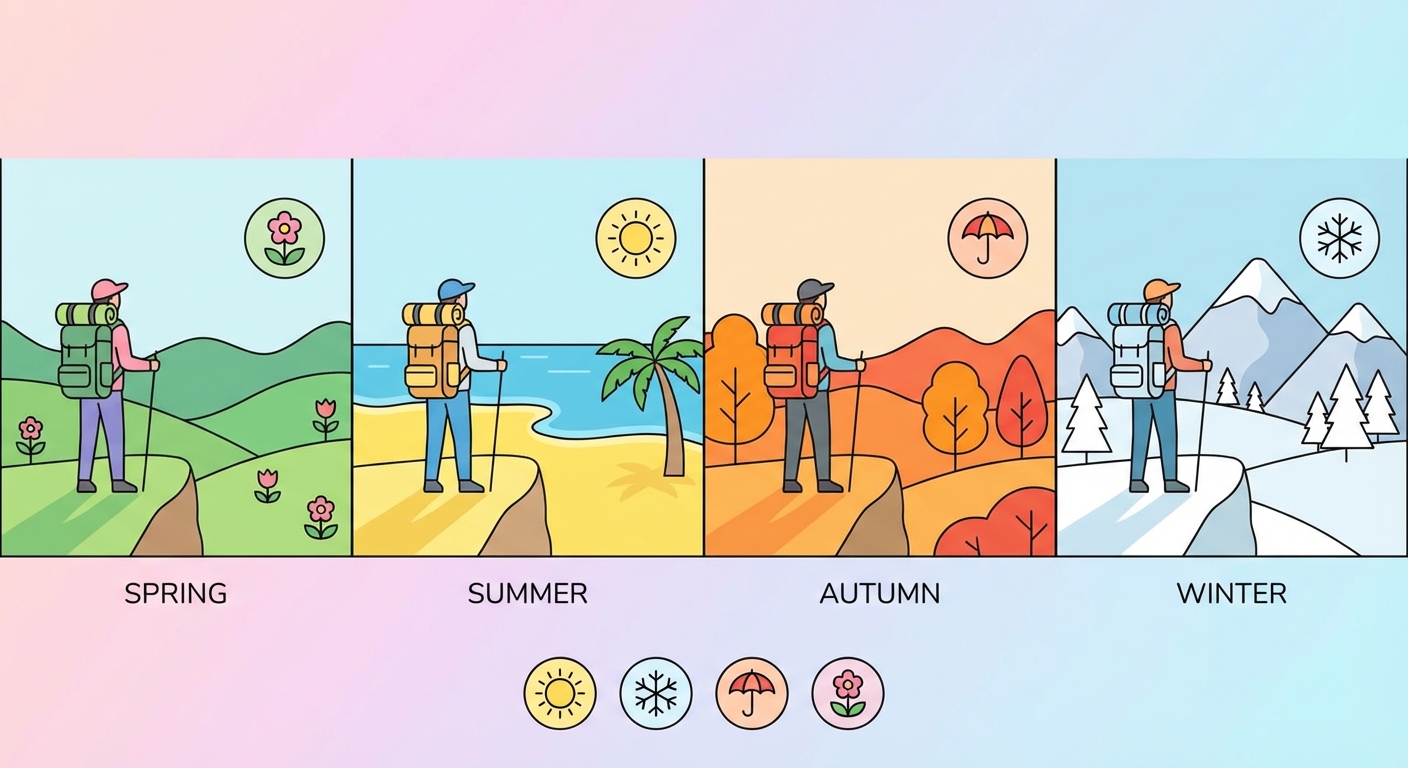
Spring (March–May)
Spring is magical in France. Temperatures range from 10–16°C (50–61°F) in early March, warming to 18–22°C (64–72°F) by late May. Cherry blossoms blanket Parisian parks, and wildflowers paint the countryside. Rainfall is moderate but frequent—pack layers and a light jacket. This is an ideal time to visit before summer crowds arrive.
Summer (June–August)
Summer brings warmth and sunshine, with temperatures between 20–28°C (68–82°F). July and August are peak months, with long daylight hours perfect for sightseeing. However, expect crowds at major attractions like the Eiffel Tower and Versailles. Accommodation and flights are pricier. The Mediterranean coast is glorious, but beaches get crowded. Many Parisians flee the city for vacation, closing some restaurants and shops.
Autumn (September–November)
Autumn is arguably France's finest season. September offers summer warmth (18–25°C / 64–77°F) with fewer tourists. Wine harvest season begins in September, and vineyards in Bordeaux and Burgundy are spectacular. By November, temperatures drop to 8–12°C (46–54°F), and rain increases, but fall foliage in the Loire Valley is stunning. This is when locals reclaim their cities.
Winter (December–February)
Winter is cold but charming. Temperatures hover around 3–8°C (37–46°F). Snow rarely falls except in the Alps. Paris sparkles with Christmas lights and holiday markets. Hotel rates plummet, and queues shorten. However, daylight is limited, and some regional attractions have reduced hours. January is the quietest—perfect if you prefer solitude and don't mind cooler weather.
Peak vs. Off-Peak Travel
Peak Season (June–August)
Peak season brings record tourist numbers, especially in Paris, Provence, and the French Riviera. Hotels double their rates, restaurants are booked solid, and major sites have hour-long queues. Popular restaurants in Lyon or Nice require advance reservations. If you travel during peak season, book accommodation and tours weeks in advance. The upside? Weather is reliably warm, and all attractions operate with extended hours.
Shoulder Season (April–May and September–October)
Shoulder season offers the sweet spot: pleasant weather, manageable crowds, and reasonable prices. May brings spring sunshine perfect for exploring Parisian neighborhoods or the Côte d'Azur. September offers warm days ideal for coastal visits and vineyard tours. Hotel rates are 20–30% cheaper than summer, yet attractions remain fully operational.
Off-Season (November–March)
Off-season means lower costs and intimate experiences. Museums are quieter, allowing you to truly absorb masterpieces at the Louvre. Winter markets in Strasbourg (November–December) are atmospheric and authentic. However, expect shorter opening hours at smaller museums, restaurants, and countryside attractions. The trade-off is acceptable if you prioritize budget and avoiding crowds.
Month-by-Month Highlights
- January–February: Winter markets, wine tasting, Alps skiing
- March–April: Easter markets, spring gardens, mild weather
- May: Lavender begins blooming, perfect spring weather
- June–July: Lavender in full bloom, Music festivals, beach season
- August: Summer peak, coastal crowds, some cultural attractions close
- September: Grape harvest, warm weather, fewer tourists
- October: Fall foliage, wine season, comfortable temperatures
- November–December: Christmas markets, lower accommodation costs, holidays
Travel Tips for Any Season
Whatever season you choose, staying connected is essential. Grab an eSIM from uPhone before arrival to access maps, translation apps, and local recommendations without relying on unreliable café Wi-Fi. With data in your pocket