🇵🇹 eSIM for Portugal
- Unlimited data
- 7-day validity
- Fast and reliable internet
- No more roaming charges
- Instant QR code by email
* As low as price reflects the cheapest per-day rate, based on the longest available unlimited data plan duration.







Why choose us?
See how uPhone compares with other options in Portugal.

eSIM prices for Portugal
All prices in USD
7 days of unlimited data in Portugal costs $16.26 — about $2.32 a day on MEO, Vodafone Portugal or NOS, with no roaming charge and no SIM to swap. In Portugal, 5G is live and median mobile download speed is 71.2 Mbps.
Which networks you connect to in Portugal
Your eSIM roams onto Portugal's own operators. These are the networks and the frequencies they run — check your phone supports them before you travel.
Source: Ookla Speedtest Global Index, July 2025
Coverage in Portugal
B20 (800 MHz) is widely used for rural and indoor coverage; phones lacking B20 may experience reduced coverage outside urban areas. DIGI Portugal is a newer entrant with a still-expanding own network and national roaming on MEO in some areas.

Enjoy your Portugal vacation
Portugal is Europe's great hidden gem — a country of melancholic fado music, crumbling azulejo-tiled palaces, world-class surf and some of the continent's most under-appreciated food and wine. Lisbon climbs seven hills above the Tagus estuary, its neighbourhoods connected by yellow trams and lit by a golden light that artists have sought for centuries; Porto's wine-cellar-lined riverfront earned it the title of Europe's Best City; the Algarve's dramatic cliff-fringed beaches are among Europe's finest; and Madeira's volcanic landscape makes it one of the Atlantic's most extraordinary islands. Portugal is also remarkably affordable and welcoming. With a uPhone eSIM you'll connect to NOS, MEO or Vodafone Portugal for reliable 4G/5G coverage nationwide.
Top attractions in Portugal
Portugal's attractions combine the Age of Discovery's maritime legacy with spectacular Atlantic landscapes and one of Europe's most walkable and photogenic cities.
- Belém Tower & Jerónimos Monastery, Lisbon — The twin monuments of Portugal's Age of Discovery: the Manueline Gothic monastery where Vasco da Gama is buried, and the riverside tower from which his ships once departed for India.
- Sintra's Palaces & Forest — The UNESCO-listed hill town above Lisbon: the candy-coloured Pena Palace perches on the highest crag; the Moorish Castle offers valley views; the Quinta da Regaleira hides an initiatory well of spiralling stone stairs descending into the earth.
- Ribeira & Port Wine Cellars, Porto — UNESCO-listed riverside neighbourhood of colourful townhouses, ancient port wine lodges in Vila Nova de Gaia across the river, and the Luis I bridge connecting them above the Douro. Europe at its most atmospheric.
- Pena dos Corvos & Seven Hanging Valleys Trail, Algarve — The Rota Vicentina and Seven Valleys coastal trail pass through the most dramatic of the Algarve's golden-limestone sea stacks, arches and grottos.
- Douro Valley Wine Country — The river valley between Porto and Spain is UNESCO-listed, its impossibly steep terraced vineyards producing some of the world's finest port and dry red wines. A river cruise or train journey through the Douro is unforgettable.
- Azores & Madeira Islands — Two extraordinary Atlantic archipelagos: the Azores for whale watching, volcanic calderas and thermal hot springs; Madeira for levada walks, laurisilva forest and the world's best toboggan (downhill wicker sledge).
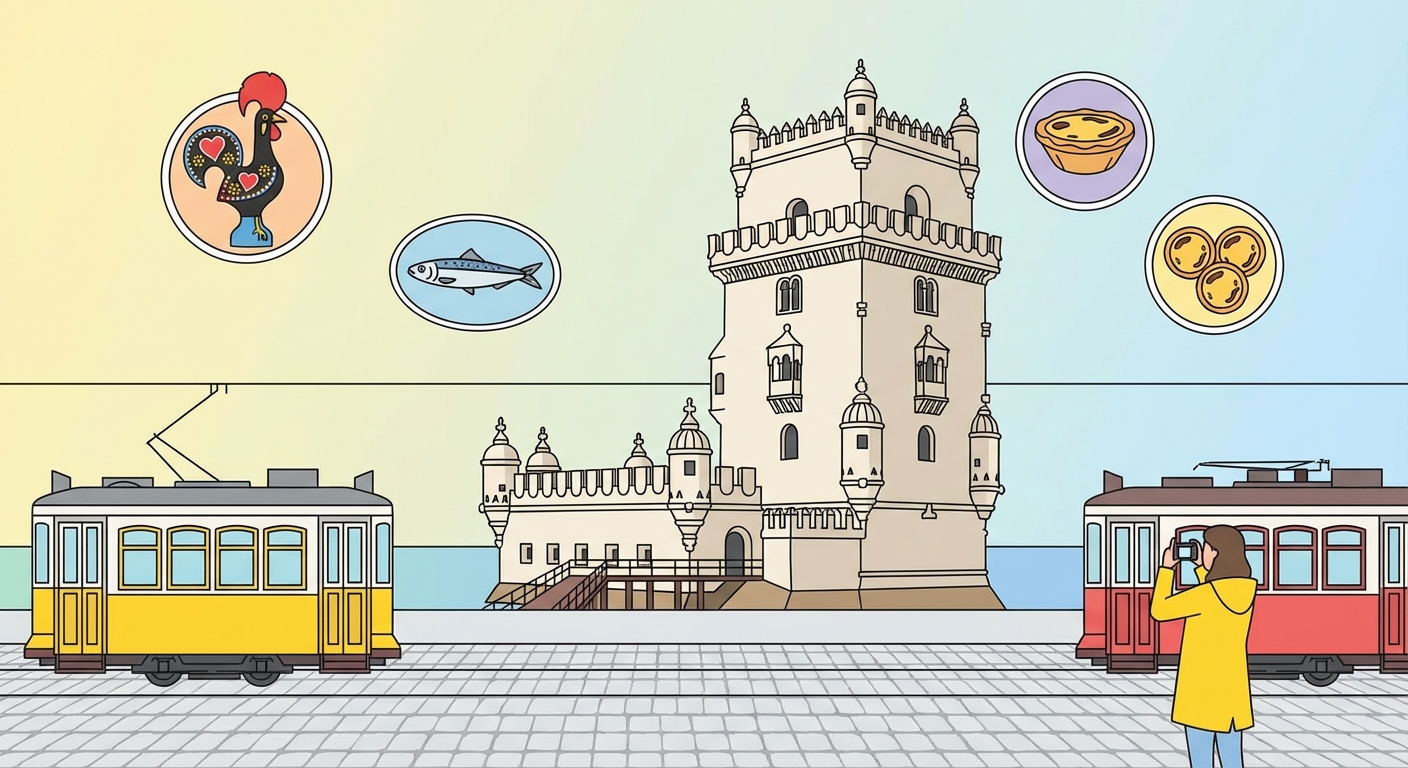
Popular foods to try in Portugal
Portuguese cuisine is honest, generous and anchored in exceptional ingredients — Atlantic seafood, Alentejo black pork, olive oil, garlic and wine are the cornerstones. Eating well in Portugal is easy and affordable even by European standards.
- Pastel de Nata — The custard tart that conquered the world. Crispy caramelised pastry shell, silky egg cream filling, dusted with cinnamon. At Pastéis de Belém in Lisbon, the original recipe has been unchanged since 1837.
- Bacalhau (Salt Cod) — Portugal claims 365 ways to cook bacalhau — one for each day of the year. Bacalhau à Brás (shredded with eggs and potatoes) and bacalhau com natas (with cream) are the most beloved.
- Francesinha, Porto — Porto's outrageously indulgent sandwich: layers of bread, ham, linguiça sausage and steak, smothered in melted cheese and a spicy beer-and-tomato sauce. A complete meal and then some.
- Grilled Sardines (Sardinhas Assadas) — Salted and grilled over charcoal, served whole on bread, with roasted peppers. Particularly magnificent during Lisbon's Santo António festival in June.
- Caldo Verde — Portugal's most comforting soup: creamy potato broth with shredded kale (couve galega) and a slice of linguiça sausage. Northern Portugal's great winter warmer.
- Ginjinha — A sour cherry liqueur served in a tiny chocolate cup or small glass, drunk in one sip. The ritual of ginjinha at a Lisbon street window is one of the great affordable urban pleasures.

Best time to visit Portugal
Spring (April–June) is Portugal at its most beautiful — the countryside is green and wildflower-covered, temperatures are perfect for sightseeing (18–24°C in Lisbon), and crowds are manageable before the summer peak. May is arguably the ideal month for both cities and the Algarve coast.
Summer (July–August) is peak season — the Algarve beaches are at their warmest and sunniest, but extraordinarily crowded and expensive. Lisbon reaches 30–35°C and attracts millions of visitors. Inland Alentejo can exceed 40°C in August. If visiting in summer, the Azores and northern Portugal (Porto, Douro Valley) offer cooler temperatures and less tourist pressure.
Autumn (September–October) is a golden compromise — summer heat fades, sea temperatures remain warm for swimming (22–23°C), and the Douro wine harvest (vendima) transforms the valley in September. Winter in Lisbon and Porto is mild (12–16°C) and entirely functional for city tourism, with atmospheric off-season atmosphere and very low accommodation prices.
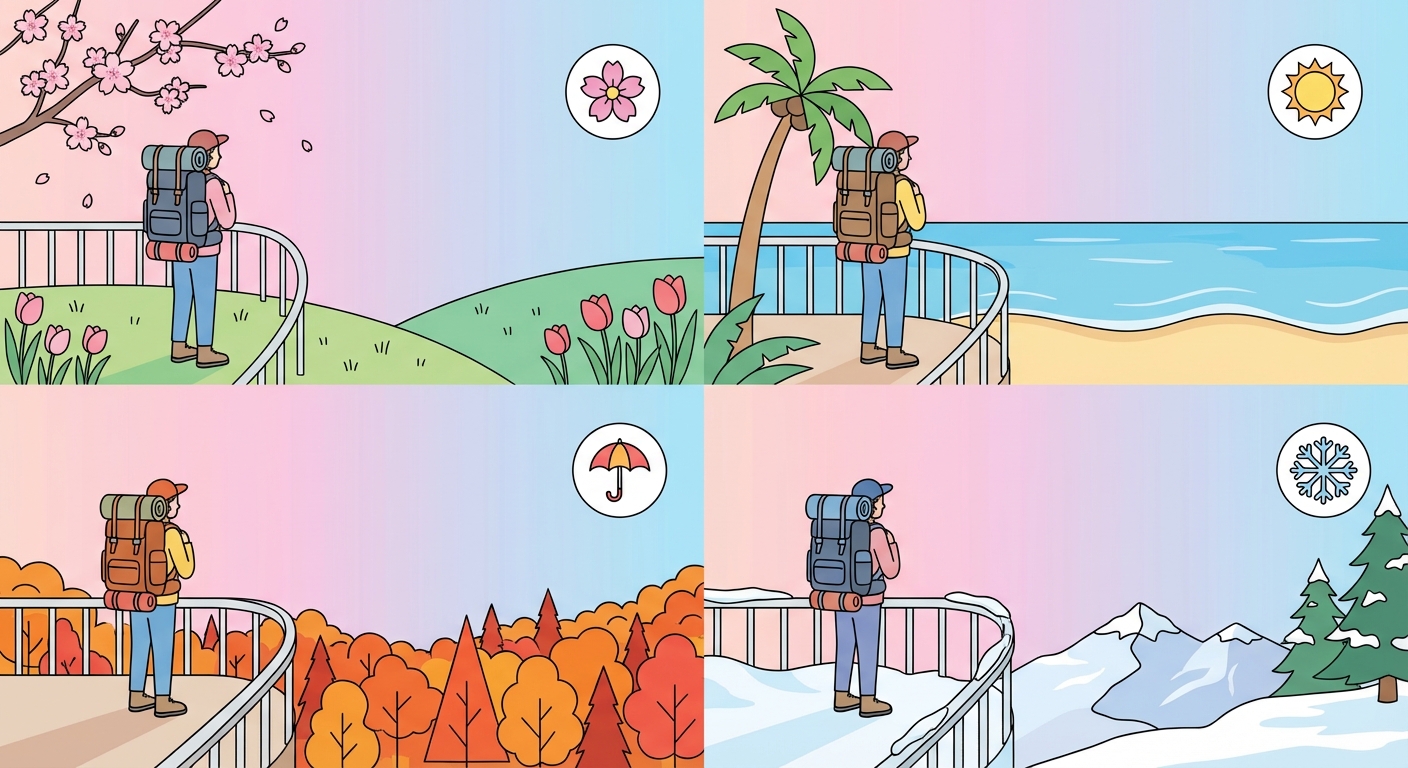
What to pack for your visit to Portugal
Portugal's Atlantic climate is generally mild but variable — even in summer, sea breezes make evenings fresh, and winter rainfall can be persistent. Pack layers and be prepared for cobblestones — Lisbon's hills are steep and the pavements slippery when wet.
- Comfortable, flat shoes — Lisbon's famous hills and mosaic cobblestone streets (calçada portuguesa) are charming but dangerous in heels or smooth-soled shoes when wet. Trainers or leather soles with grip are essential.
- A light waterproof jacket — Portuguese weather can produce sudden Atlantic rain even in summer, particularly in Porto and the north. A packable rain jacket weighs nothing and saves the day.
- Sunscreen for the Algarve — Portugal's southern coast receives intense UV in summer. Atlantic sea breezes make the heat feel manageable but sunburn is easy — apply SPF 50+ even on beach days with cloud cover.
- A light evening layer — Even in July and August, Lisbon and Porto evenings cool to 18–20°C with Atlantic breezes. A light denim jacket or cardigan prevents the café-terrace chill.
- Cash in euros — Portugal is increasingly card-friendly, but local markets, smaller cafés and rural guesthouses still prefer cash. ATMs (Multibanco machines) are widely available and reliable.
- Your uPhone eSIM — Connects on NOS or MEO for strong 4G coverage in Lisbon, Porto, the Algarve and along the main motorway routes. Coverage on the Azores and Madeira is good in settled areas.

Frequently Asked Questions
Everything you need to know about your Portugal eSIM
Need help? We're here for you.
Questions before or during your trip — our support team is always available via live chat and email. Typical response time under 2 minutes.
Chat with us
Bundle Portugal with other nearby countries.

Multiple countries.
Other uPhone eSIM destinations
Explore eSIM plans for more countries around the world.