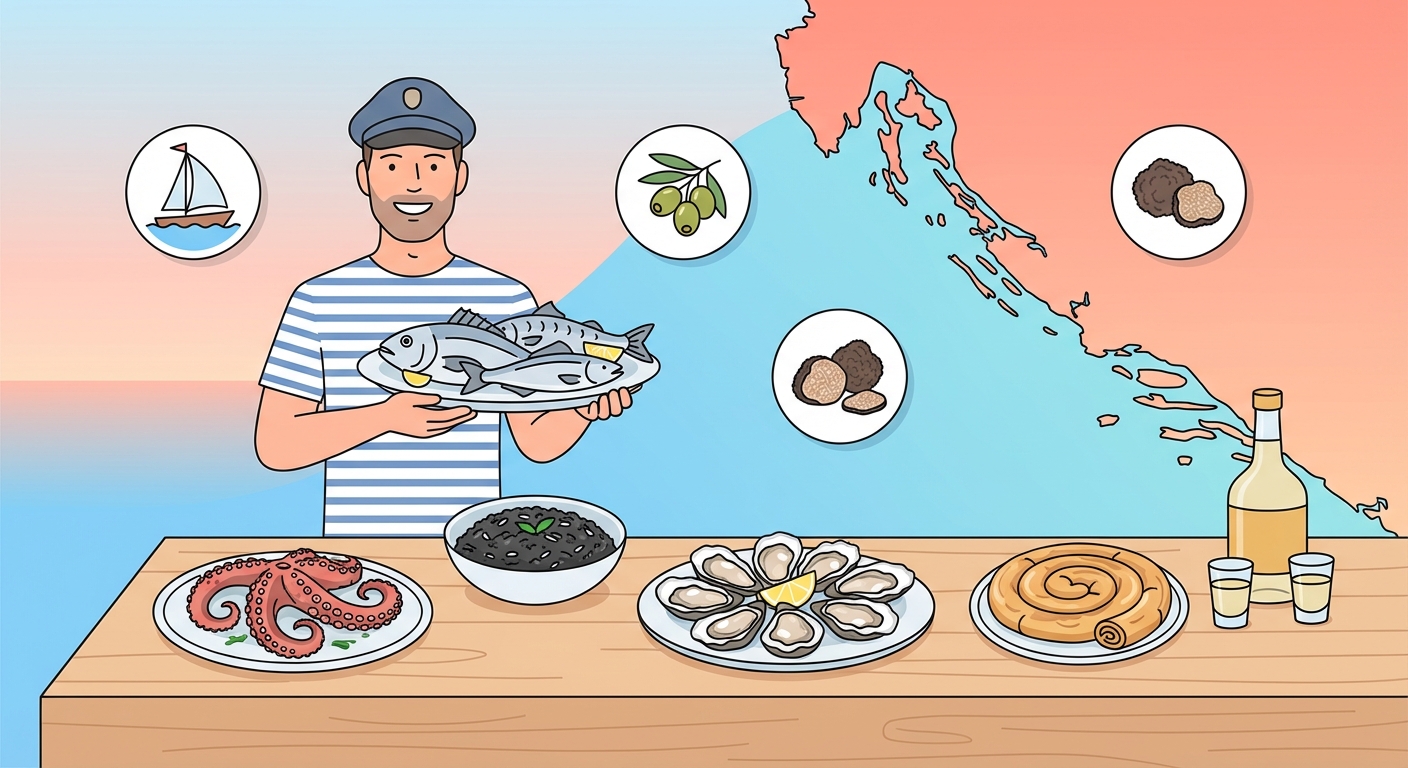
Croatia's culinary landscape is a delicious blend of Mediterranean, Austro-Hungarian, and Balkan influences that reflect centuries of cultural exchange. From the Adriatic coast's fresh seafood to inland meat specialties, Croatian cuisine offers unforgettable flavors that tell the story of this beautiful region. Whether you're exploring the cobblestone streets of Dubrovnik or the wine regions of Istria, food is central to understanding Croatian culture. Before you dive into this gastronomic adventure, make sure you have reliable data access to research restaurants, check reviews, and share your culinary discoveries—an eSIM from uPhone gives you seamless connectivity throughout your journey.
Iconic Coastal Dishes
Croatia's long Adriatic coastline means seafood is absolutely central to local cuisine. Black risotto, known as crni rizot, is a Dalmatian specialty made with cuttlefish ink, creating a striking dark rice dish with tender squid. You'll find exceptional versions in Split and Dubrovnik at waterfront restaurants like Ivo or Nostromo.
Brodet, a traditional fish stew, varies by region but typically combines multiple fish varieties, tomatoes, and white wine. The Dalmatian and Istrian versions are particularly renowned. For the freshest experience, seek out family-run restaurants in smaller coastal towns like Cavtat or Vis, where fishermen bring in the day's catch each morning.
Scampi na buzaru is another must-try—large shrimp cooked in a savory tomato-based sauce with garlic and wine. The sauce is perfect for soaking up with crusty bread. Grilled octopus, simply prepared with olive oil, garlic, and lemon, showcases the quality of fresh local seafood.
Street Food & Regional Specialties
Croatian street food culture is vibrant and authentic. Ćevapčići, grilled minced meat sausages, are sold from small stands throughout the country and served in a pita with onions and sour cream. These are everywhere—grab them from a burek stand for a quick, satisfying lunch.
Pljeskavica, sometimes called the "Croatian burger," is a large, seasoned patty of ground meat grilled and served with fresh vegetables and kajmak (a creamy dairy product similar to sour cream). Zagreb's main square and street corners are filled with vendors serving this hearty favorite.
- Burek – flaky pastry filled with meat, cheese, or spinach, best eaten warm from a bakery
- Krof – Croatian doughnuts, often filled with jam or custard, perfect with morning coffee
- Smokva – fig-based sweet treat popular in Dalmatia
- Pag cheese – a hard, salty sheep's milk cheese from the island of Pag, excellent with local wine
Popular Restaurants & Dining Culture
For fine dining with traditional Croatian cuisine, Restaurant Ivo in Dubrovnik offers innovative takes on regional dishes with stunning Old Town views. In Split, Konoba Varos serves hearty, traditional meals in an intimate stone setting.
Zagreb's restaurant scene is equally impressive. Ivica i Marija combines rustic charm with sophisticated preparations of heritage recipes. For casual dining, konobas (traditional taverns) are found throughout Croatia, offering family recipes passed down through generations at reasonable prices.
Istrian restaurants deserve special mention, particularly around Motovun and Grožnjan, where truffle dishes feature prominently. White truffle pasta, paired with local wines, is an experience not to miss. Many restaurants source ingredients from nearby farms and markets.
Food Culture & Dining Tips
Croatians take their food seriously and mealtimes are social occasions. Lunch is typically the main meal, often lasting two hours. Dinner comes late—expect restaurants to fill around 8 or 9 PM. Don't rush through meals; locals linger over courses and conversation.
Visit local markets early in the morning. Dolac Market in Zagreb and markets in Dubrovnik overflow with seasonal produce, fresh fish, and local cheeses. This is where you'll find the most authentic ingredients and meet locals happy to share recommendations.
Wine culture is integral to Croatian dining. Pair coastal meals with crisp white wines from the coast, and inland dishes with robust reds from regions like Inland Croatia. Ask restaurant staff for recommendations—they're passionate about local producers.
Keep your phone ready with an eSIM connection to check restaurant hours, make reservations, and look up unfamiliar dishes. Having reliable data ensures you won't miss hidden gems or local favorites tucked away on side streets.