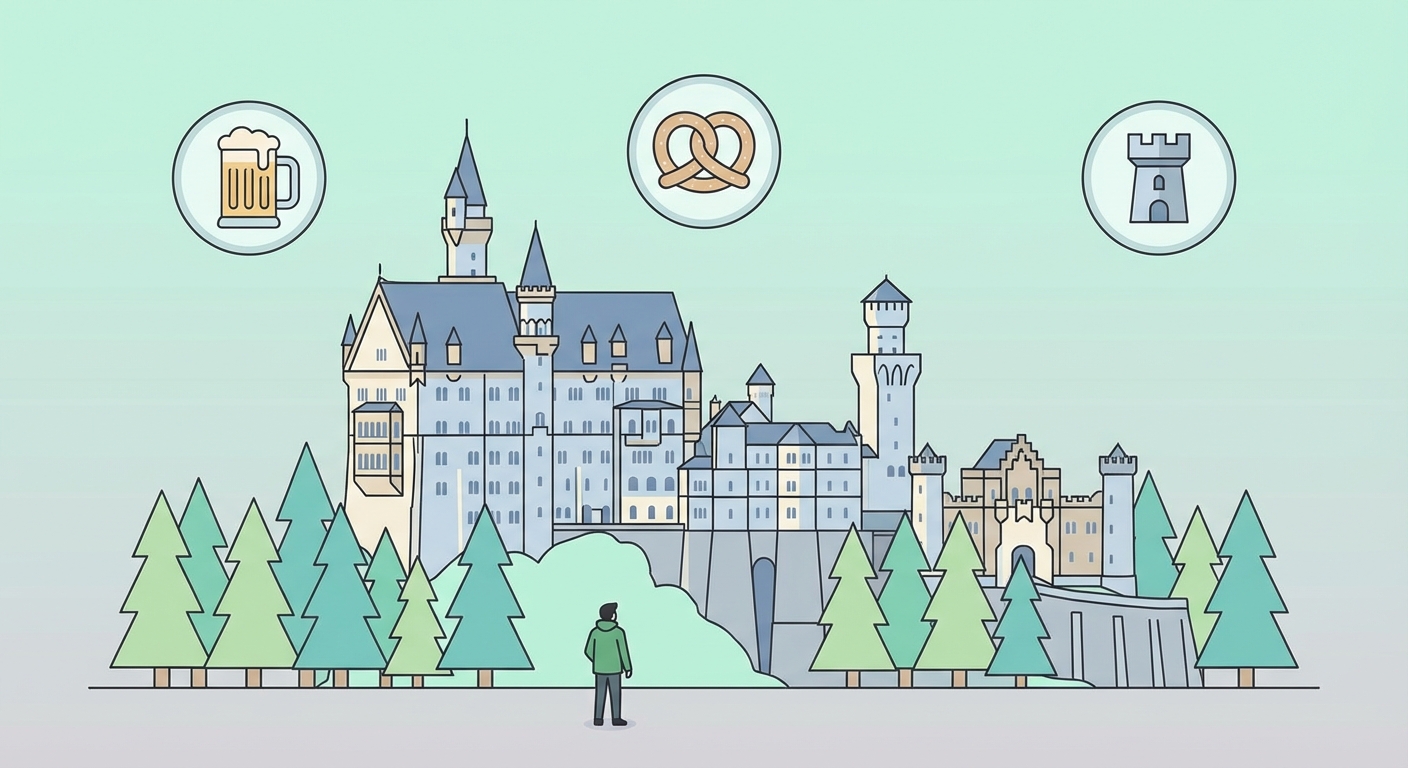
Germany rewards the budget-conscious traveller who plans a logical route. The country’s efficient transport network, affordable supermarkets, and thousands of free or low-cost attractions make it possible to see a great deal without spending a fortune. This guide follows a practical north-to-south spine, covering accommodation, food, transport, attractions, and the everyday money habits that will keep your budget on track.
Planning Your Route
The most cost-effective route starts in Hamburg, moves to Berlin, then south to Munich, with a detour to the Rhine Valley. This linear path avoids expensive backtracking and lets you use regional trains, which are far cheaper than high-speed ICE services. If time allows, add a stop in Cologne or Frankfurt, but keep the sequence logical.
Accommodation: Where to Save and Where to Spend
Save: Hostels are the backbone of budget accommodation. In Berlin, a dorm bed in a central hostel (e.g., near Friedrichshain or Mitte) runs €20–€35 per night. In Munich, expect €25–€40. Book at least two weeks ahead for summer or Oktoberfest. Trade-off: Private rooms in hostels cost double but offer quiet and security for solo travellers. Spend more: In the Rhine Valley, a small guesthouse (Gästehaus) with breakfast included can be €60–€80 per night. The extra cost here buys you a central location near vineyards and castles, and often a home-cooked evening meal.
Alternative: Couchsurfing or house-sitting works in major cities but requires advance planning. For spontaneous stays, use hostel booking apps that show same-day deals.
Food: Supermarkets and Street Food
Breakfast: Skip hotel buffets. Buy bread rolls (Brötchen), butter, sliced cheese, and jam from a supermarket (Rewe, Edeka, Aldi) for under €3. Pair with a €1.50 coffee from a bakery. Lunch: Döner kebab shops are ubiquitous and filling at €4–€6. In Berlin, currywurst with bread costs €3–€4. Dinner: Self-catering is cheapest: a pasta meal with salad from a supermarket costs €4–€5. For a sit-down meal, choose a family-run Gasthaus (often in smaller towns) where a main dish of Schnitzel or Sauerbraten with potatoes runs €10–€14. Avoid tourist-trap restaurants near main squares.
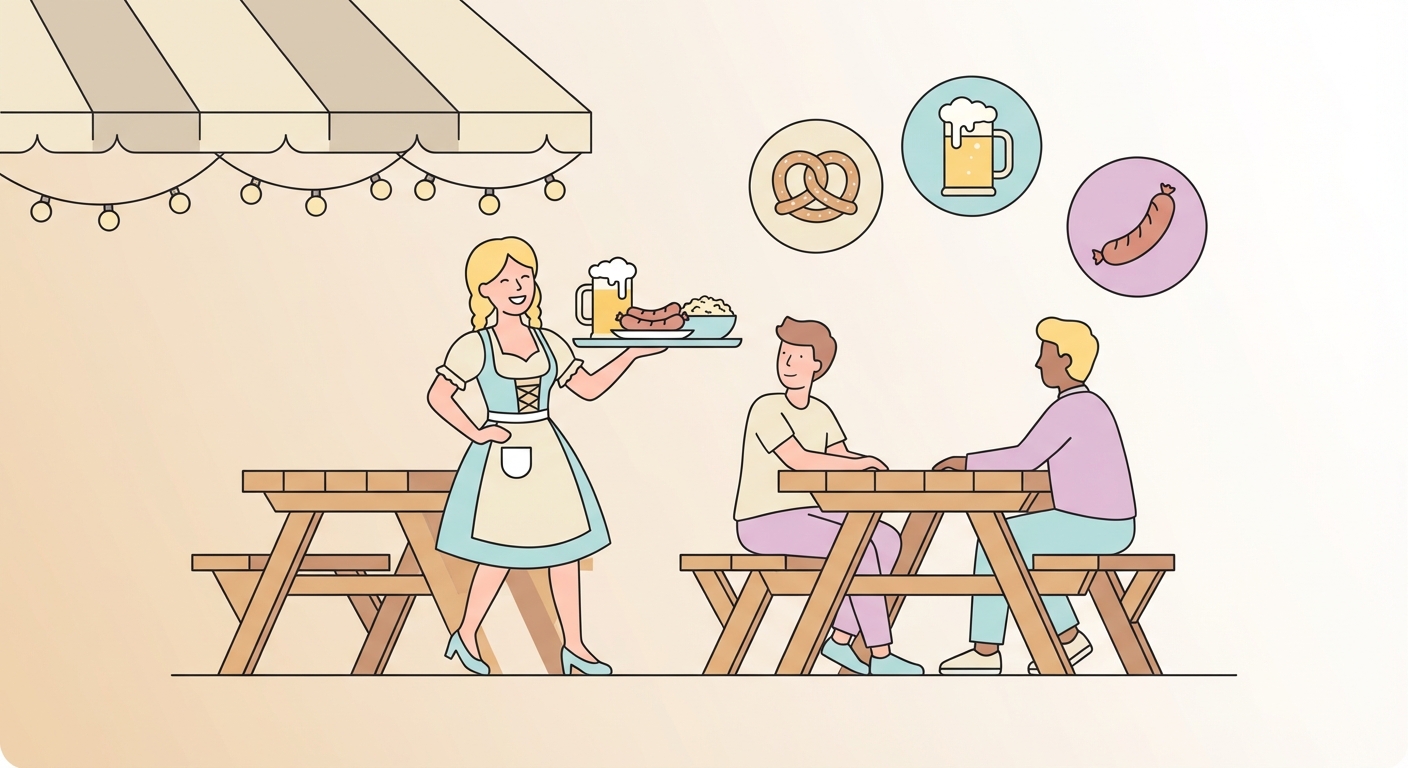
Where spending more helps: In Munich’s beer gardens, a Maß (1-litre) of beer costs €7–€9. Paying a little more for a traditional Augustiner or Hofbräu experience is worth it for the atmosphere, but stick to one Maß and share a pretzel.
Local Transport: The Smart Way to Move
Trains: Regional trains (RE, RB, IRE) are cheap and scenic. The Deutschland-Ticket (€49 per month in 2026) covers all regional transport nationwide, including buses and trams in cities. For a 10-day trip, buy one monthly ticket and use it for all local and regional journeys. High-speed ICE trains cost extra (€30–€80 per leg), so avoid them unless you are short on time. Buses: FlixBus and other intercity buses are often half the price of trains (e.g., Berlin to Munich from €15–€25 if booked early). The trade-off is longer travel times, but they are comfortable and have Wi-Fi.
City transport: Most German cities sell day tickets (€7–€10) that cover all buses, trams, and U-Bahn. Berlin and Munich have excellent bike-share systems (€1 per 30 minutes). Walking is free and often the best way to see old towns.
Attractions: Free and Low-Cost Highlights
Many of Germany’s best attractions cost nothing. Free: The Berlin Wall Memorial, the East Side Gallery, the Reichstag dome (book ahead), the Brandenburg Gate, and the Holocaust Memorial. In Hamburg, the Elbphilharmonie plaza has free panoramic views. In Munich, the Englischer Garten is huge and free. Low-cost: The Pergamon Museum in Berlin costs €12 (reduced €6). The Deutsches Museum in Munich is €15. Buy a city pass (e.g., Berlin WelcomeCard) only if you plan to visit three or more paid museums; otherwise, pay per attraction.
Where spending more helps: A guided walking tour (€15–€20) in a historic city like Rothenburg ob der Tauber or Heidelberg is money well spent. Local guides reveal stories you will not find in guidebooks, and you will avoid wasting time on mediocre sights.
Payment Habits: Cash vs. Card
Germany is still a cash-heavy country. Many smaller restaurants, bakeries, and market stalls do not accept credit cards. Always carry €50–€100 in cash. ATMs (Geldautomat) are widely available, but avoid Euronet machines, which charge high fees. Use bank-affiliated ATMs (Sparkasse, Volksbank, Deutsche Bank) for free or low-cost withdrawals. Cards: Contactless debit (Girocard) and credit cards (Visa, Mastercard) are accepted in larger shops, hotels, and supermarkets. American Express is rarely used. Tipping: Round up the bill. For a €9.50 meal, pay €10.50. For a €22 dinner, give €25. Tipping 5–10% is standard; do not tip for counter service. Leave the cash on the table or say “Stimmt so” (keep the change).
Mobile Data: Staying Connected
To avoid roaming charges, buy a local SIM upon arrival or, more conveniently, arrange a Germany eSIM before you leave. eSIMs from providers like Telekom, Vodafone, or O2 offer prepaid data plans starting at €10 for 5GB. Installation takes minutes, and you can top up online. Public Wi-Fi is common in cafes and hotels but may require a German phone number for login, so having your own data is more reliable.
Daily Budget Bands (Per Person, Per Day)
- Frugal (€50–€70): Hostel dorm, self-catered meals, one paid attraction, walking or bike-share, and one cheap beer. Works best in Berlin or smaller towns.
- Comfortable (€80–€110): Hostel private room or budget guesthouse, one sit-down meal, two paid attractions, one regional train journey, and a couple of drinks.
- Splurge (€120–€150): Mid-range hotel, three meals out, one guided tour, a high-speed train leg, and a museum pass. Worth it for a single day in Munich or the Rhine Valley.
Useful Cautions
Beware of hidden costs: Some hostels charge €3–€5 for linen rental or late check-in. Always confirm. Museum free days: Many state museums offer free entry on the first Sunday of the month. Plan around this. Regional train delays: Deutsche Bahn regional trains are punctual about 85% of the time. Always have a backup plan (e.g., a later train) if connections are tight. Tap water: It is safe to drink but rarely served free in restaurants. Fill a reusable bottle at public fountains in parks. Sales tax (Mehrwertsteuer): Germany’s 19% VAT is included in listed prices. No surprise at the till.
With a logical route, a Deutschland-Ticket, and a preference for supermarkets over restaurants, a two-week trip to Germany can be done for under €1,000 per person, excluding flights. The key is to spend extra only where it enhances the experience—a guided tour, a riverside guesthouse, or a beer garden in Munich—and to save everywhere else.