Planning Your Route
Brazil’s size is its biggest budget challenge. A logical route saves both time and reais. The classic south-east loop — Rio de Janeiro, São Paulo (or skip it), then either fly north to Salvador or head inland to Minas Gerais — works well. For a longer trip, add the Pantanal (for wildlife) or the Amazon (Manaus is expensive to reach; fly in from Brasília or São Paulo). Bus travel between cities in the south-east is affordable and safe; long-distance overnight buses (leitos) cost about half a domestic flight. For the north-east coast, buses are slower; budget airlines (Gol, Azul, Latam) offer competitive fares if booked two weeks ahead.
Avoid trying to cover both the Amazon and Patagonia in one trip. Internal flights eat cash. Stick to one region per 10–14 days.
Accommodation: Where to Sleep for Less
Hostels (albergues) in Brazil are social, clean, and often include breakfast. Dorm beds in Rio or Salvador run R$50–90 per night; private rooms cost double. Book via Hostelworld or Booking.com. In smaller towns like Paraty or Jericoacoara, pousadas (small inns) are the norm. A double room in a pousada starts at R$120–180, often with a fan, not air-con. For serious budget travellers, Couchsurfing is active in cities but requires advance messaging.
Where spending more helps: choose a hostel in a safe, central neighbourhood (e.g., Botafogo in Rio, Santo António in Salvador). Saving R$20 on a bed in a sketchy area costs more in taxi fares and stress.
Food: Eating Well Without Breaking Reais
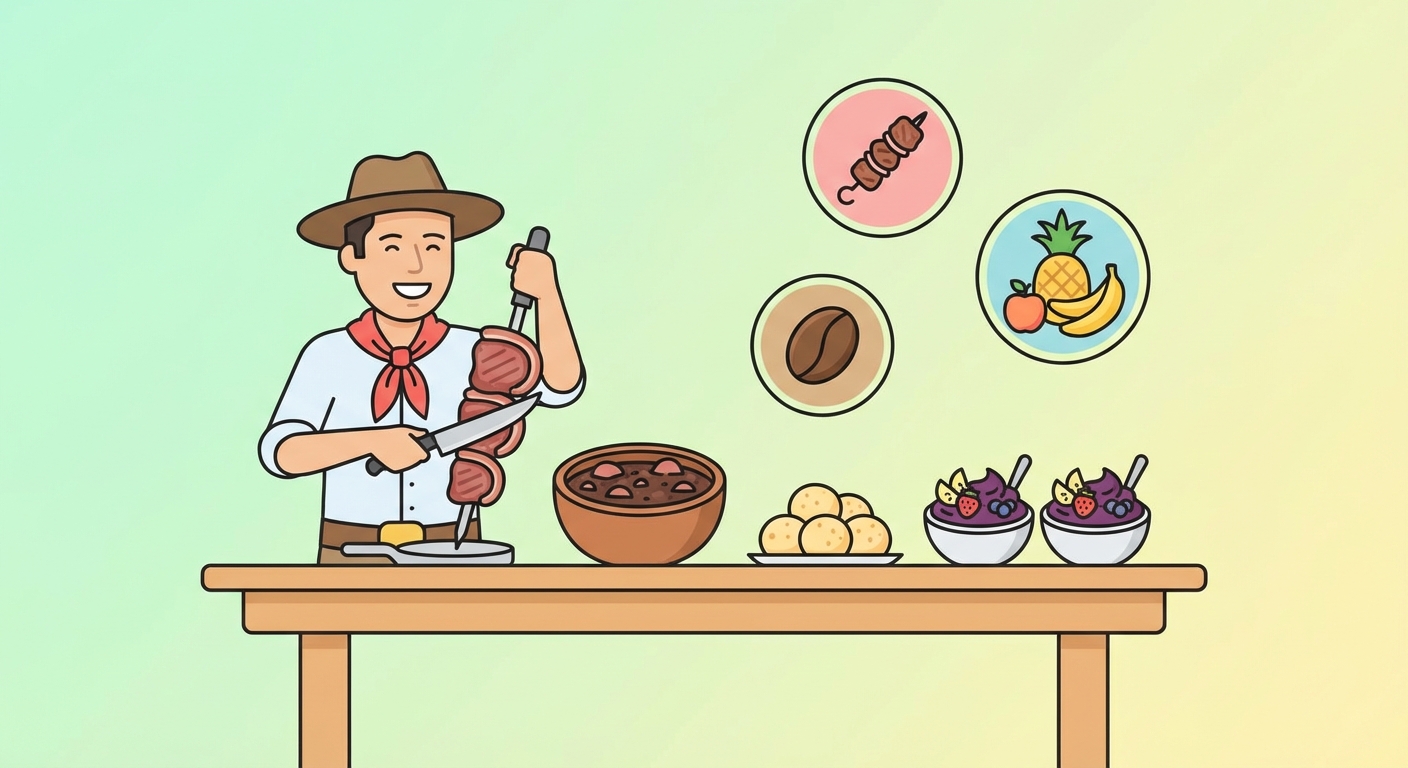
The prato feito (PF) — a plate of rice, beans, protein, and salad — is the budget staple. Cost: R$15–25 in a simple restaurant. Self-service buffets (pay by weight) offer variety for R$20–35. Street food: pastéis (fried pastries, R$5–10), tapioca crepes (R$8–12), and açaí bowls (R$10–15) are filling and cheap.
Coffee culture: a cafezinho (small, strong) costs R$3–5. Avoid tourist-trap beach kiosks where a coconut water is R$10; a supermarket sells it for R$4.
Where spending more helps: pay R$5 extra for a cooked breakfast at the hostel rather than buying snacks. You’ll eat less lunch and have more energy.
Local Transport: Getting Around Cheaply
City buses are cheap (R$4–6 per ride) but confusing. Use Google Maps or Moovit. Uber and 99 are reliable in cities; a 10‑km ride costs R$20–35. Avoid taxis from airports — Uber is often half the price. In Rio, the VLT (light rail) connects the centre to the port area for R$5.20. The São Paulo metro is efficient; a single ticket is R$5.80.
For long-distance travel, bus companies (Viação Cometa, Catarinense) offer comfortable seats with reclining chairs and onboard snacks. Book via BuscaOnibus. A 6‑hour bus (Rio–Paraty) costs about R$60. Night buses save a hotel night.
Where spending more helps: a domestic flight from Rio to Foz do Iguaçu (Iguaçu Falls) costs R$250–400 but saves 30 hours of bus travel. That’s time and meals saved.
Attractions: Free and Worth Paying For
Many of Brazil’s best sights are free: Rio’s beaches (Copacabana, Ipanema), the Escadaria Selarón, the Parque Lage gardens, and the historic centre of Olinda. Salvador’s Pelourinho is free to wander; the Museu Afro-Brasileiro costs R$10. Iguaçu Falls: the Brazilian side costs R$110 (entry) + R$15 (bus inside park). The Argentine side is R$150 (entry) — worth it for the trails, but budget the higher ticket.
Where spending more helps: a guided tour of the Amazon (e.g., a day trip from Manaus, R$150–200) is far richer than wandering alone. Similarly, a capoeira or samba class (R$30–50) is a memorable cultural exchange.
Payment Habits: Cash, Cards, and eSIM
Brazilians use credit cards (Visa, Mastercard) everywhere — even for a R$5 coffee. You rarely need much cash, but carry R$200–300 for market stalls, small buses, and tips. ATMs charge high fees (R$10–20 per withdrawal); withdraw large amounts at once. Avoid currency exchange booths at airports; use a bank ATM in town.
For mobile data, the simplest option is to buy a Brazil eSIM before you travel. Activate it online and you avoid queuing at a Claro or Vivo store. It costs around R$40–60 for 5–10 GB and works across the country.
Digital payments: Pix is the instant-transfer system used by every vendor. You can set it up in your Brazilian bank account (if you open one) or use a pre‑paid travel card that supports Pix. Most tourists don’t need it; card is fine.
Tipping: What’s Expected
Tipping is not mandatory but is common. Restaurants: 10% is customary only if service is good. Round up the bill or leave coins. For tour guides: R$20–40 per day for a group. For hotel staff: nothing, unless a porter carries bags. For bus drivers: no tip. Over‑tipping is rare and not expected.
Daily Budget Bands
- Rock bottom (R$100–150/day): Dorm bed, PF meals, city buses, no paid attractions, self‑cooked breakfast. Works for 2–3 days in a city.
- Comfortable (R$200–350/day): Private hostel room or budget pousada, mix of self-service and street food, some Uber, two paid attractions per week.
- Splurge (R$400+/day): Mid-range hotel, restaurant dinners, domestic flights, guided tours, occasional cocktails. This is where you get real value: a better room with air‑con, a flight that saves a day, a tour that unlocks an area.
Where Spending More Actually Helps
Besides the points above, spend more on accommodation in Rio’s Zona Sul (Copacabana, Ipanema, Leblon). The safety, beach access, and transport links justify the premium. In the Pantanal, a budget lodge (R$150–200/night) includes meals and basic guiding; a luxury lodge (R$600+) adds private guides and air‑con, but the wildlife experience is similar. Spend on a night bus with reclining seats (R$10 extra) — it makes a 12‑hour journey bearable.
Do not overspend on: bottled water (tap water is safe in major cities), tourist‑shop caipirinhas (a bar charges R$15, a restaurant R$30), or “express” tours that skip the best parts.
Final Cautions
Brazil’s economy is volatile; check the real‑to‑your‑dollar rate the week you travel. Prices in this guide are from mid‑2025 and may rise 10–15% annually. Always carry a photocopy of your passport and a digital backup. Learn a few phrases: “Quanto custa?” (how much?), “A conta, por favor” (the bill, please). Brazilians are warm, but petty theft happens in crowded areas — keep your phone in a front pocket, not your back pocket. Enjoy the chaos, the music, and the discovery: budget travel in Brazil is about choosing what to spend on, not just how to save.